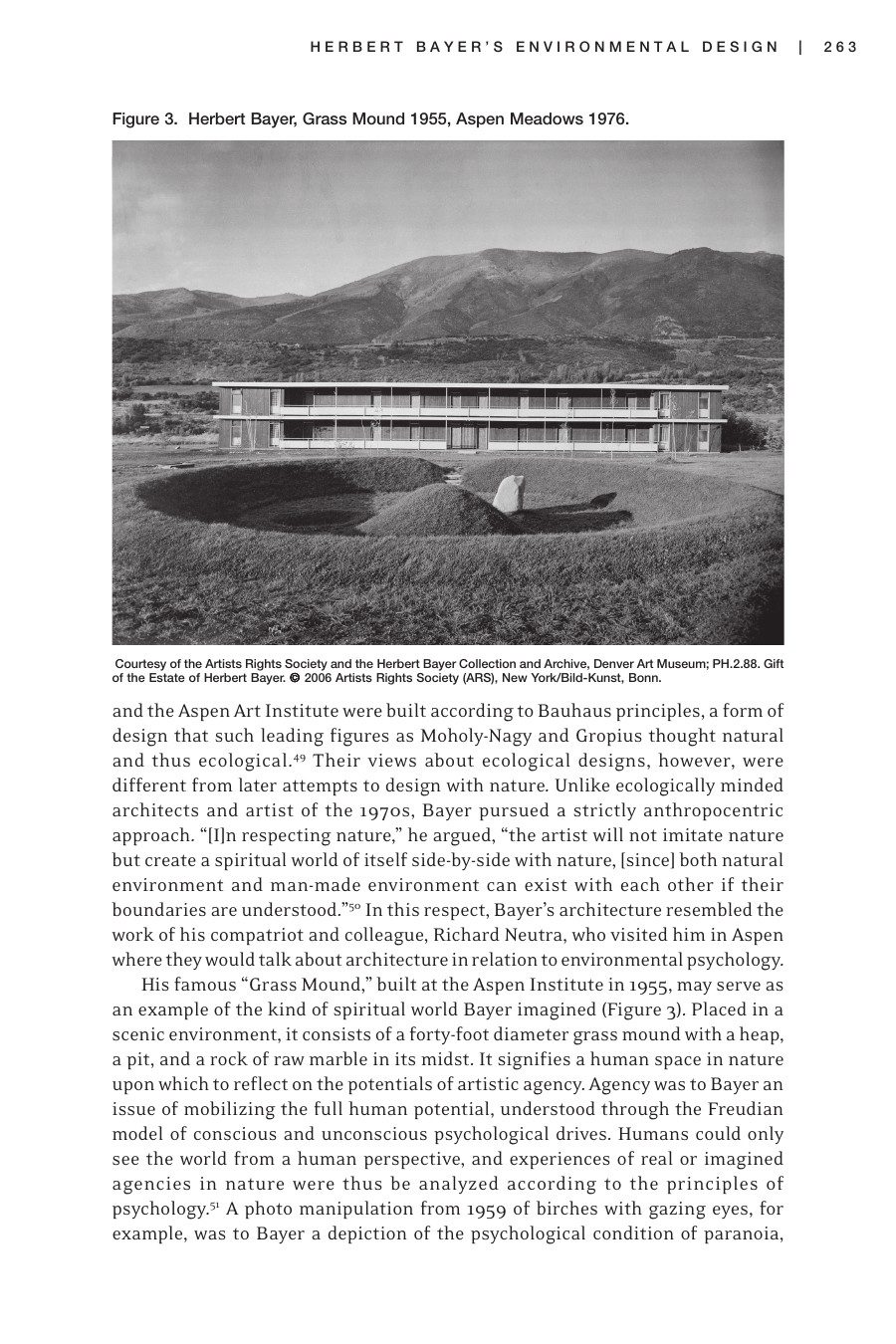
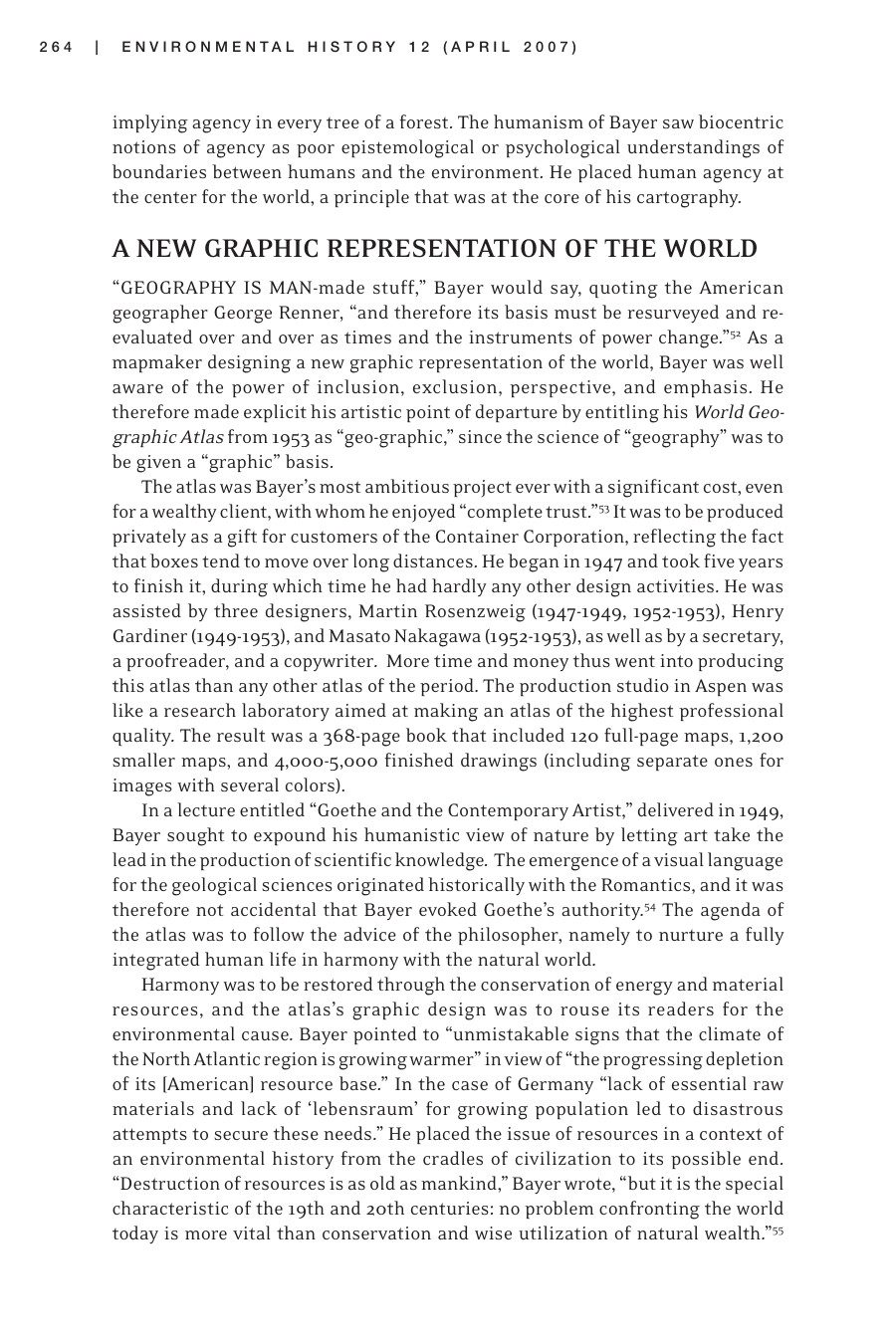
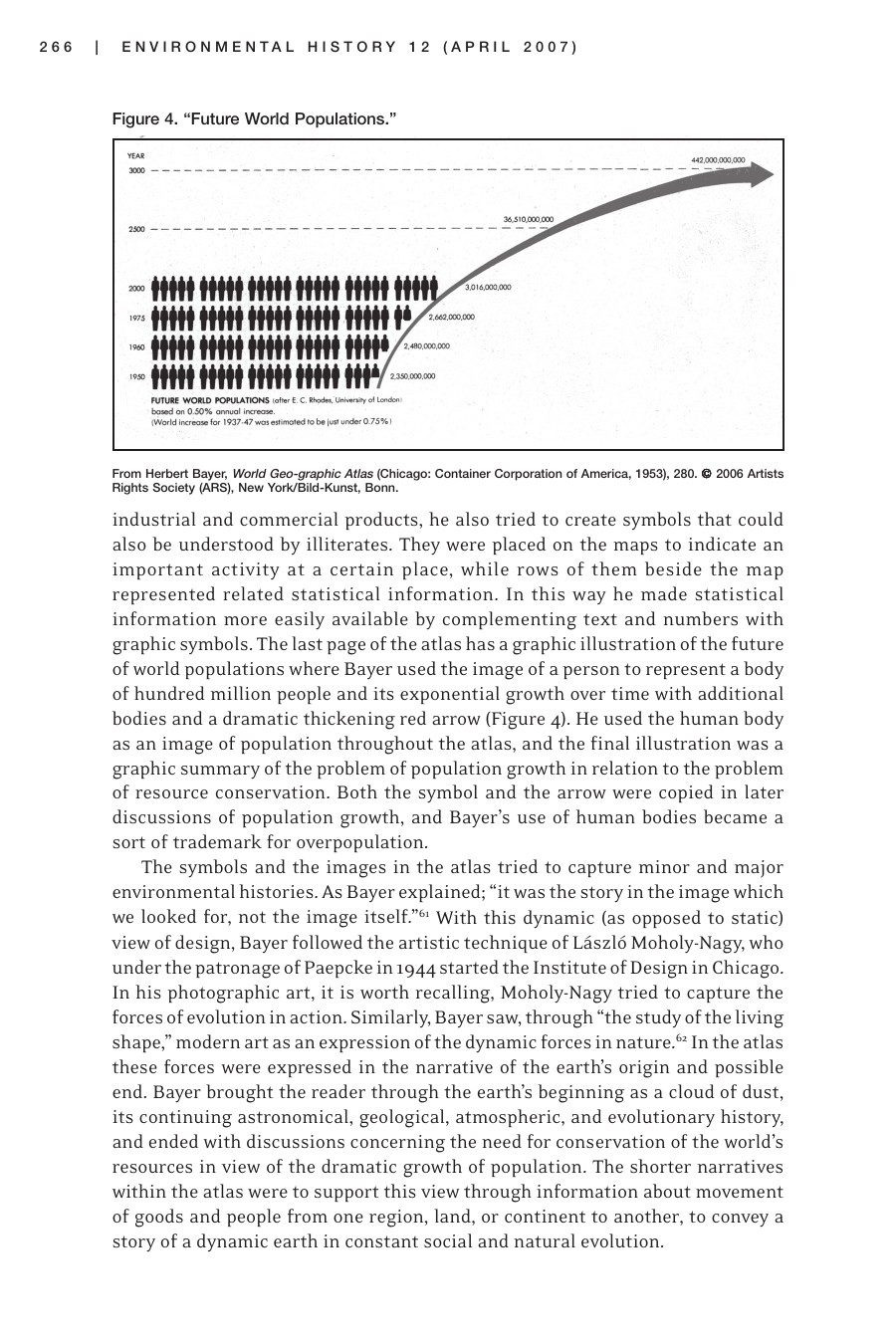
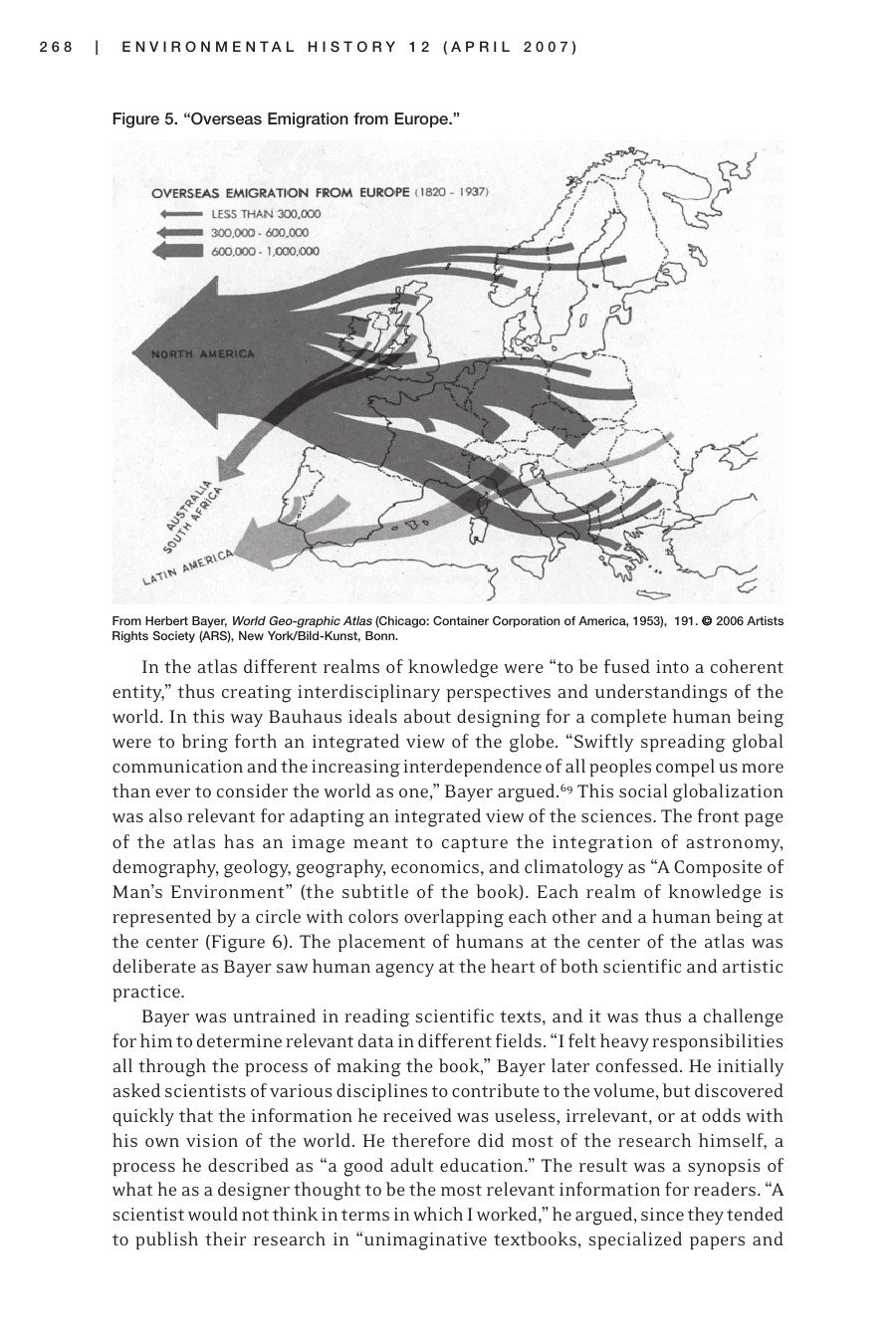
Research · Herbert Bayer Article on former Bauhaus teacher Herbert Bayer's modernist imagery and maps on globalization, conservation and environmental concerns in the United States, and his visual language of colours, symbols and illustrations. Published in Environmental History 12 (April 2007), pp. 254-279.
- Author
- Anker, Peder
- Publisher
- Environmental History
- Year
- 2007
- Language
- English
- Text
- From the PDF, searchable
Text on page 1
PEDER ANKER

 graphic language:
 HERBERT
 ENVIRONMENTAL DESIGN
 BAYER’S
 ABSTRACT
 Environmental debates are greatly indebted to artistic communication. This article
 discusses the work of the former faculty member of the German Bauhaus school,
 Herbert Bayer, who introduced modernist imagery in relation to globalization,
 conservation values, and maps dealing with environmental concerns in the United
 States. His Romantic defense of environmental design demonstrates that the
 humanist legacy of modernism has made more constructive contributions to the
 history of environmental debate than its critics have been willing to admit. Bayer’s
 global humanism and environmental designs created a visual language of colors,
 images, symbols, and dynamic illustrations that aimed at harmonizing human
 relationships with the natural world.

 THE WORK OF VISUAL artists, graphic designers, and cartographers has an
 enormous impact on popular perception of the environment, yet that work is rarely
 a topic for historians of the environment or environmentalism. The tendency has
 been to downgrade art, graphic design, and maps in favor of textual evidence.
 When admitted, such images usually play a fairly narrow role: Artwork often
 spices up an otherwise dry discussion, graphic design may provide
Archive ID ot-herbert-bayer-herbert-bayers-environm-1 · Deep zoom and record · Request removal