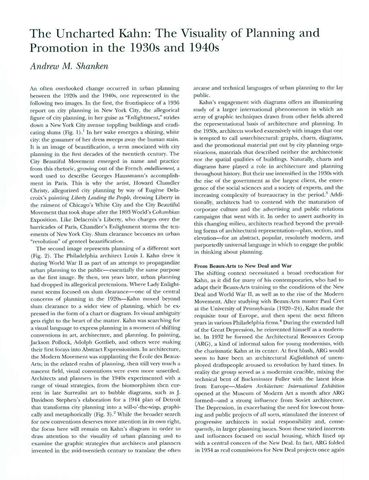
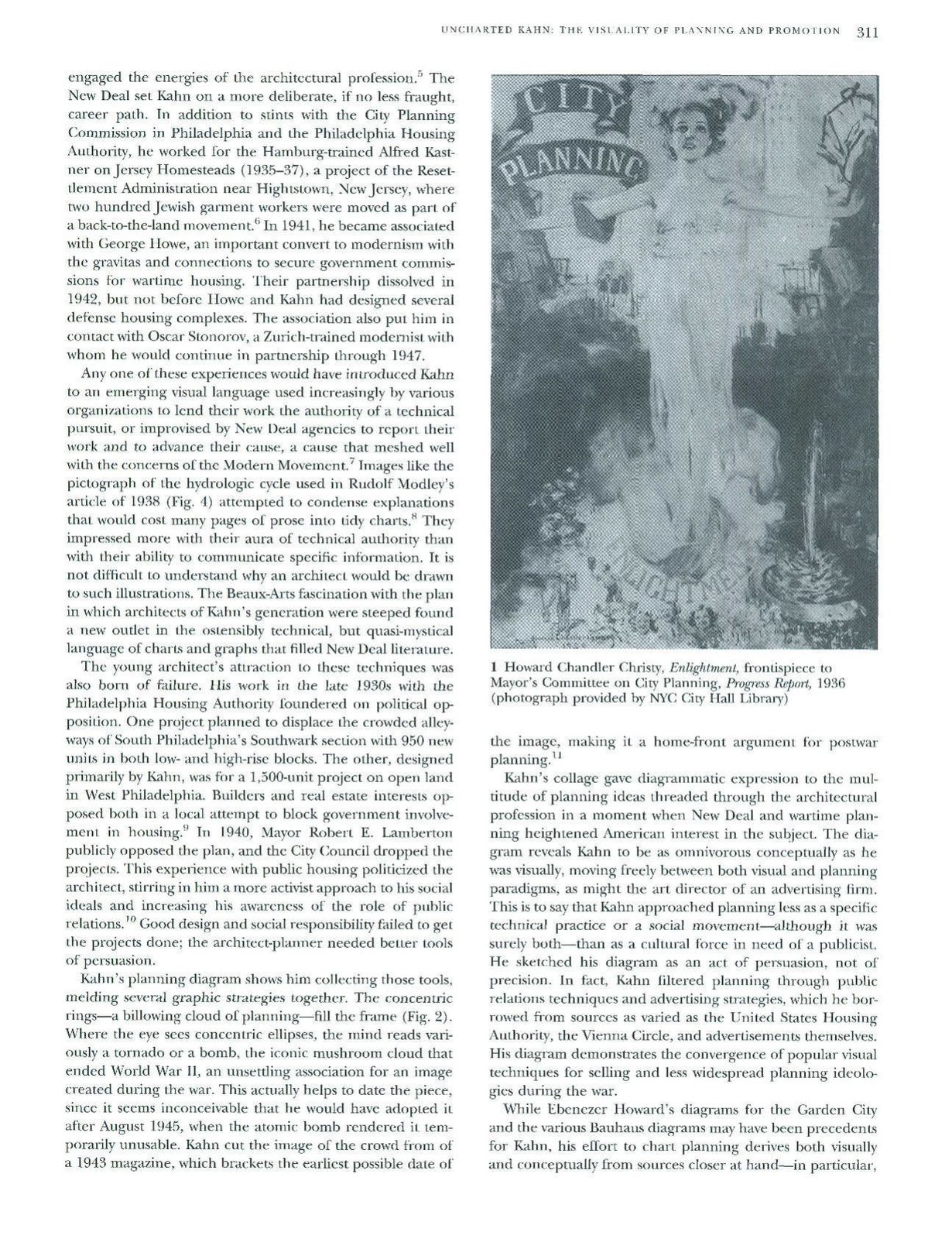
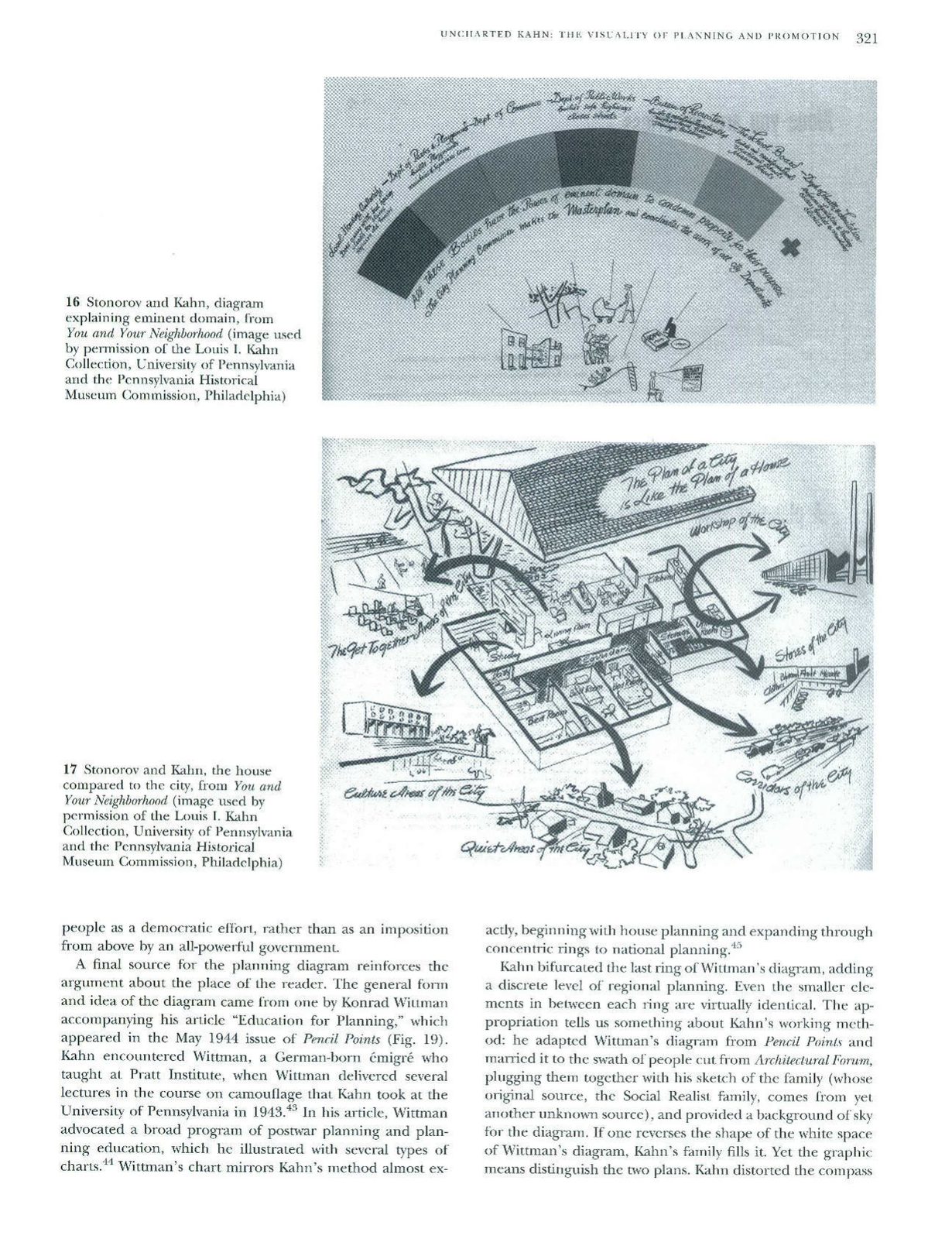
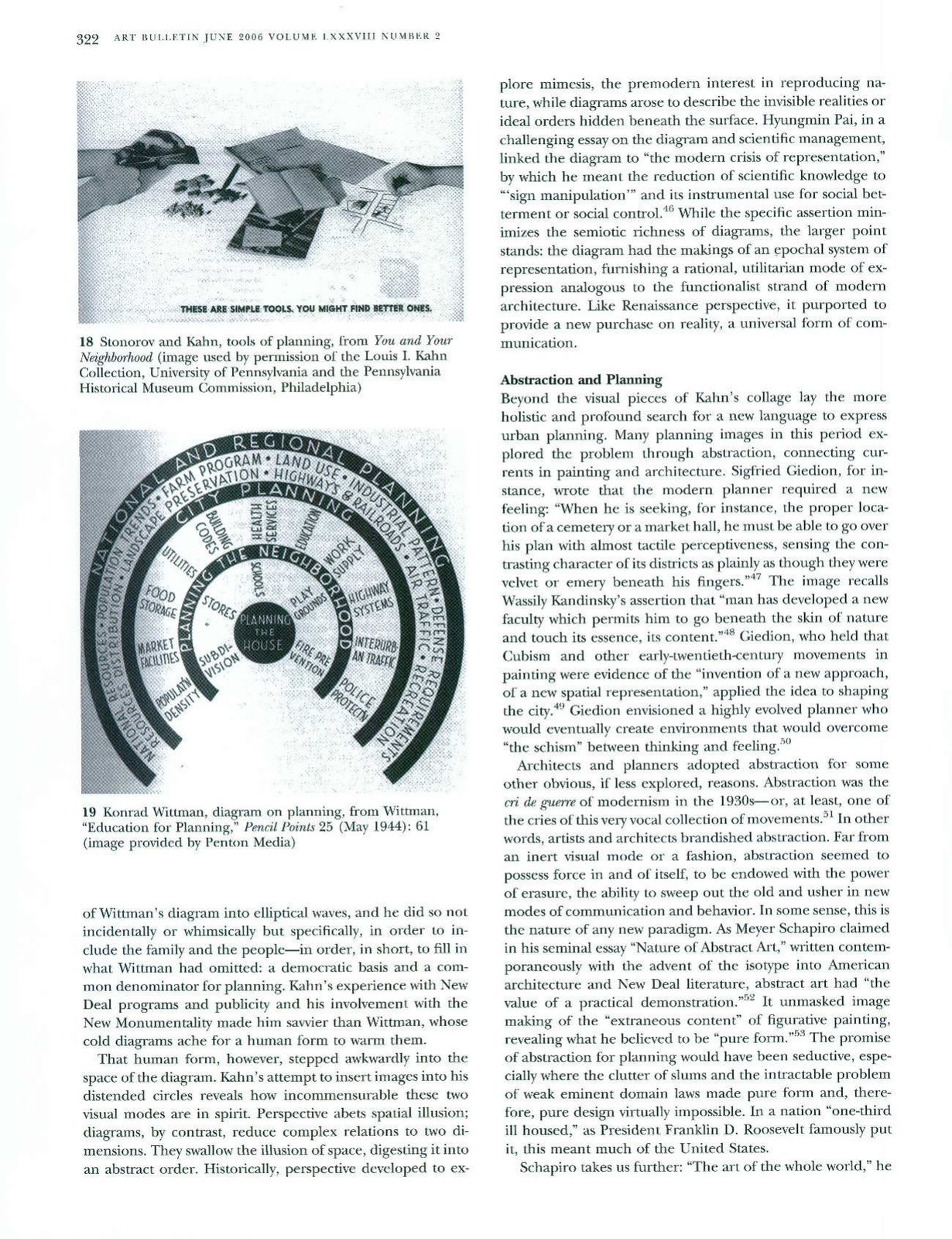
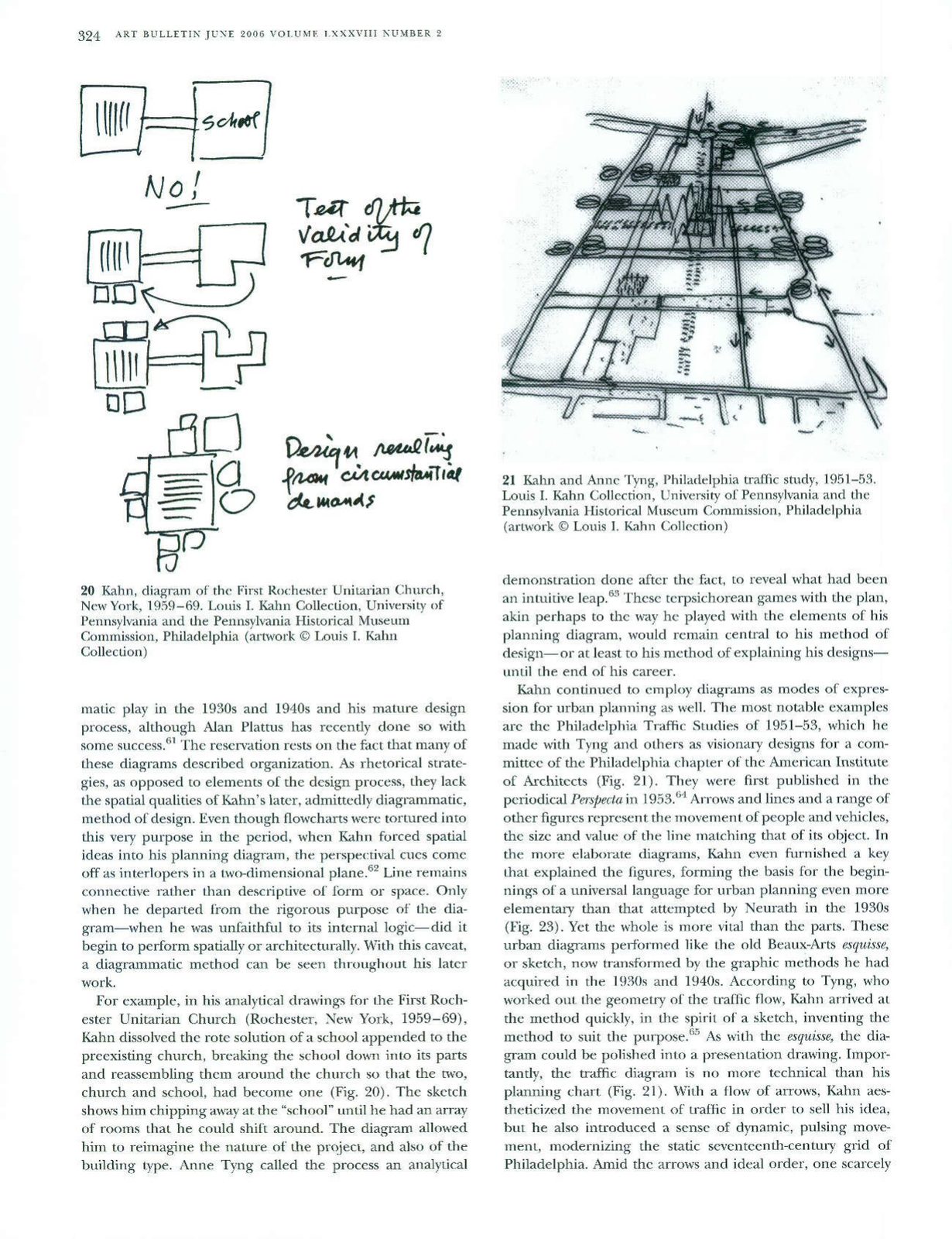
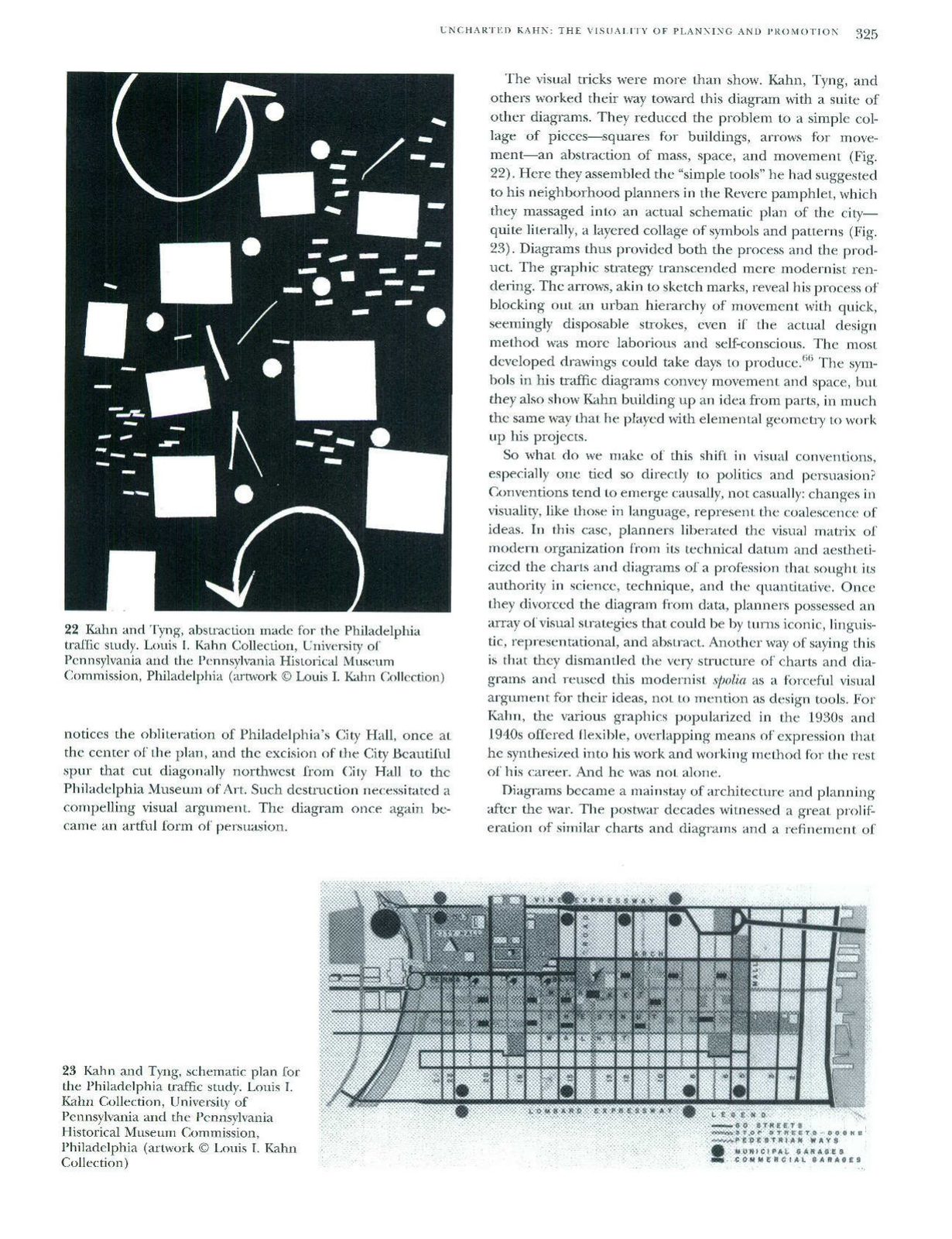
Article on Louis I. Kahn and the shift in the visual rhetoric of urban planning between the 1920s and 1940s, from City Beautiful allegory (such as Howard Chandler Christy's 1936 frontispiece for a New York planning report) to promotional graphics.
Text on page 1
The Uncharted Kahn: The Visuality of Planning and
Promotion in the 1930s and 1940s
Andrew M. Shanken

An often overlooked change occurred in urban planning arcane and technical languages of urban planning to the lay
between the 1920s and the 1940s, one represented in the public.
following two images. In the first, the frontispiece of a 1936 Kahn's engagement with diagrams offers an illuminating
report on city planning in New York City, the allegorical study of a larger international phenomenon in which an
figure of city planning, in her guise as "Enlightment," strides array of graphic techniques drawn from other fields altered
down a New York City avenue toppling buildings and eradi- the representational basis of architecture and planning. In
cating slums (Fig. 1).1 In her wake emerges a shining, white the 1930s, architects worked extensively with images that one
city: the gossamer of her dress sweeps away the human stain. is tempted to call unarchitectural: graphs, charts, diagrams,
It is an image of beautification, a term associated with city and the promotional material put out by city planning orga-
planning in the first decades of the twentieth century. The nizations, materials that described neither the architectonic
City Beautiful Movement emerged in name and practice nor the spatial qualities of buildings. Naturally, charts and
from this rhetoric, growing out of the Fr