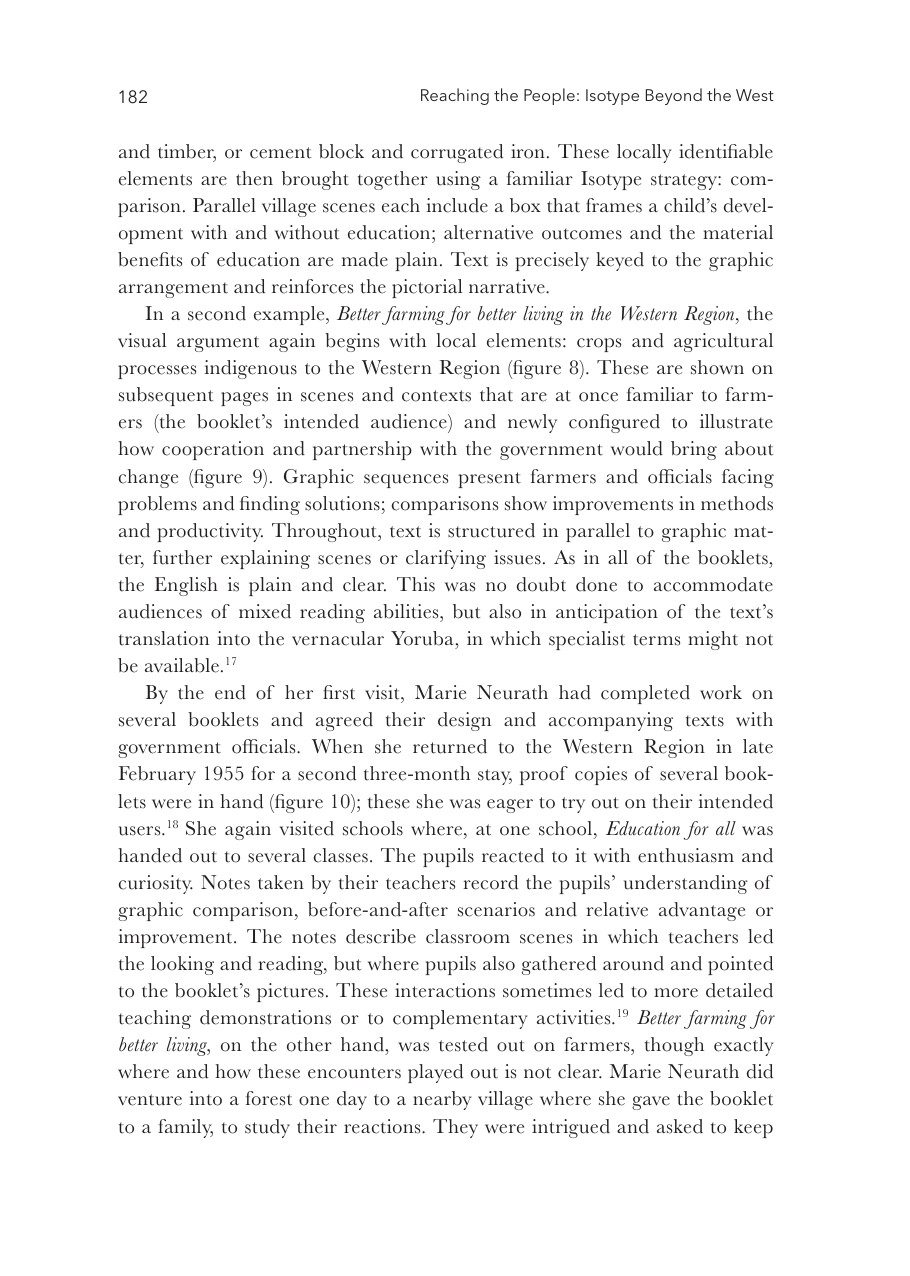
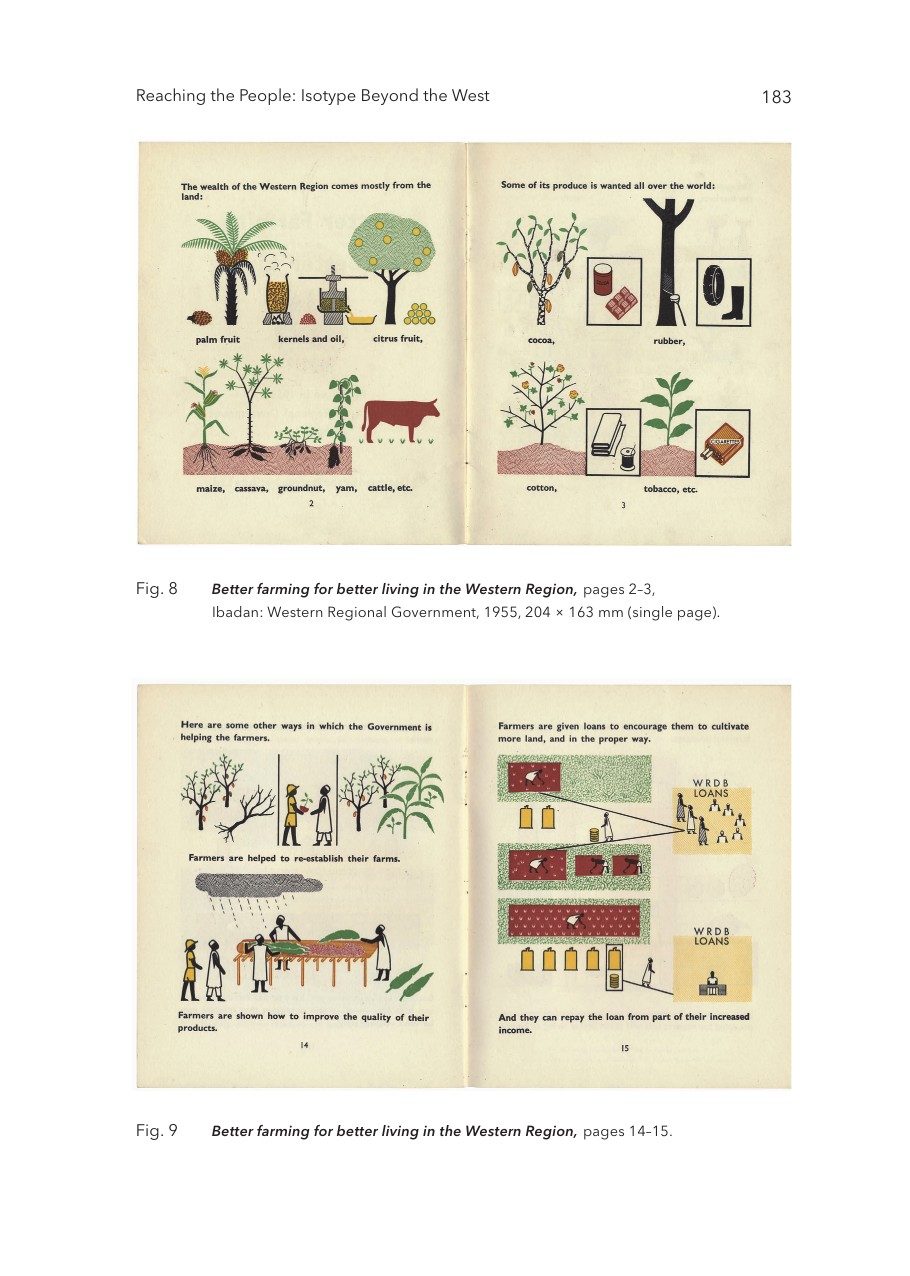
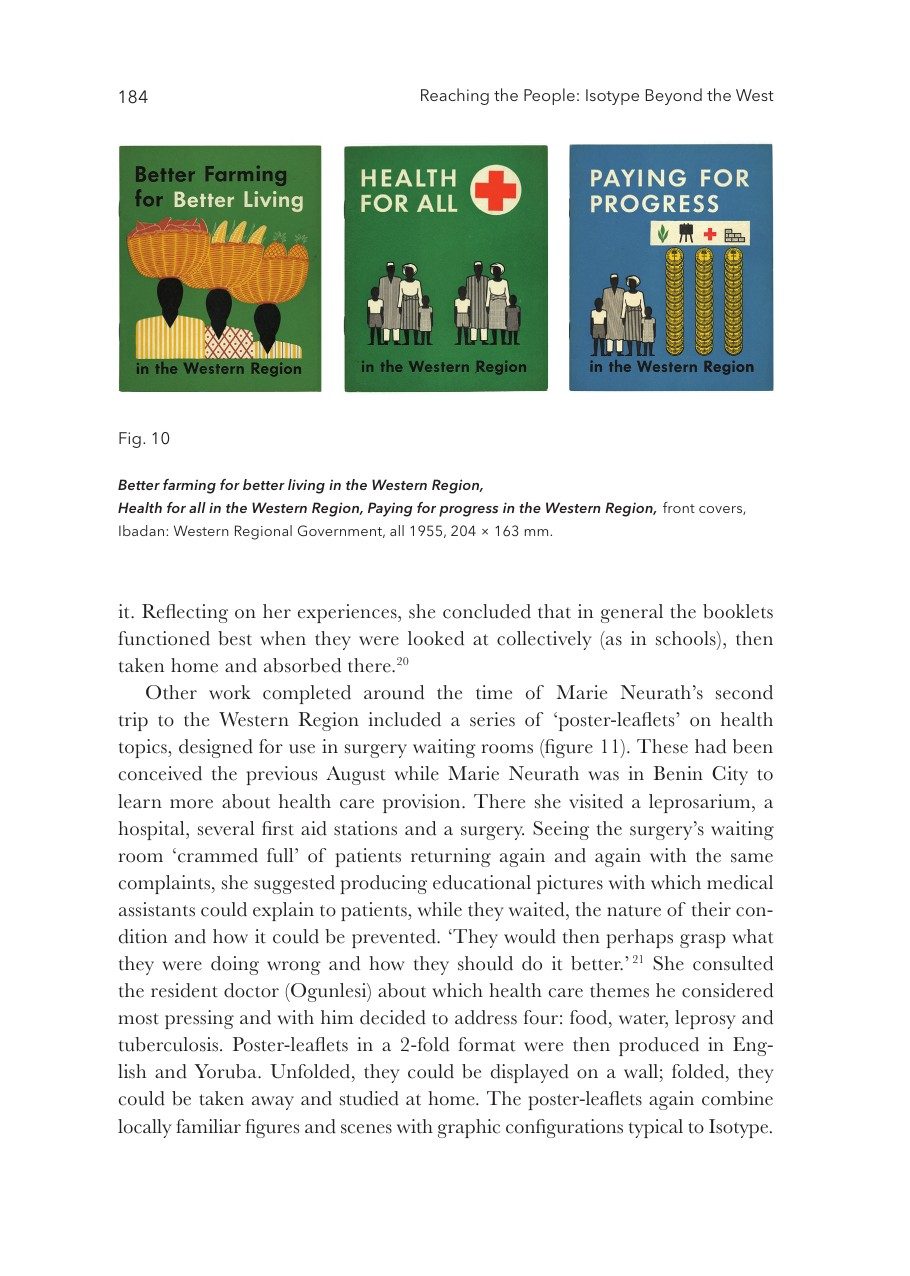
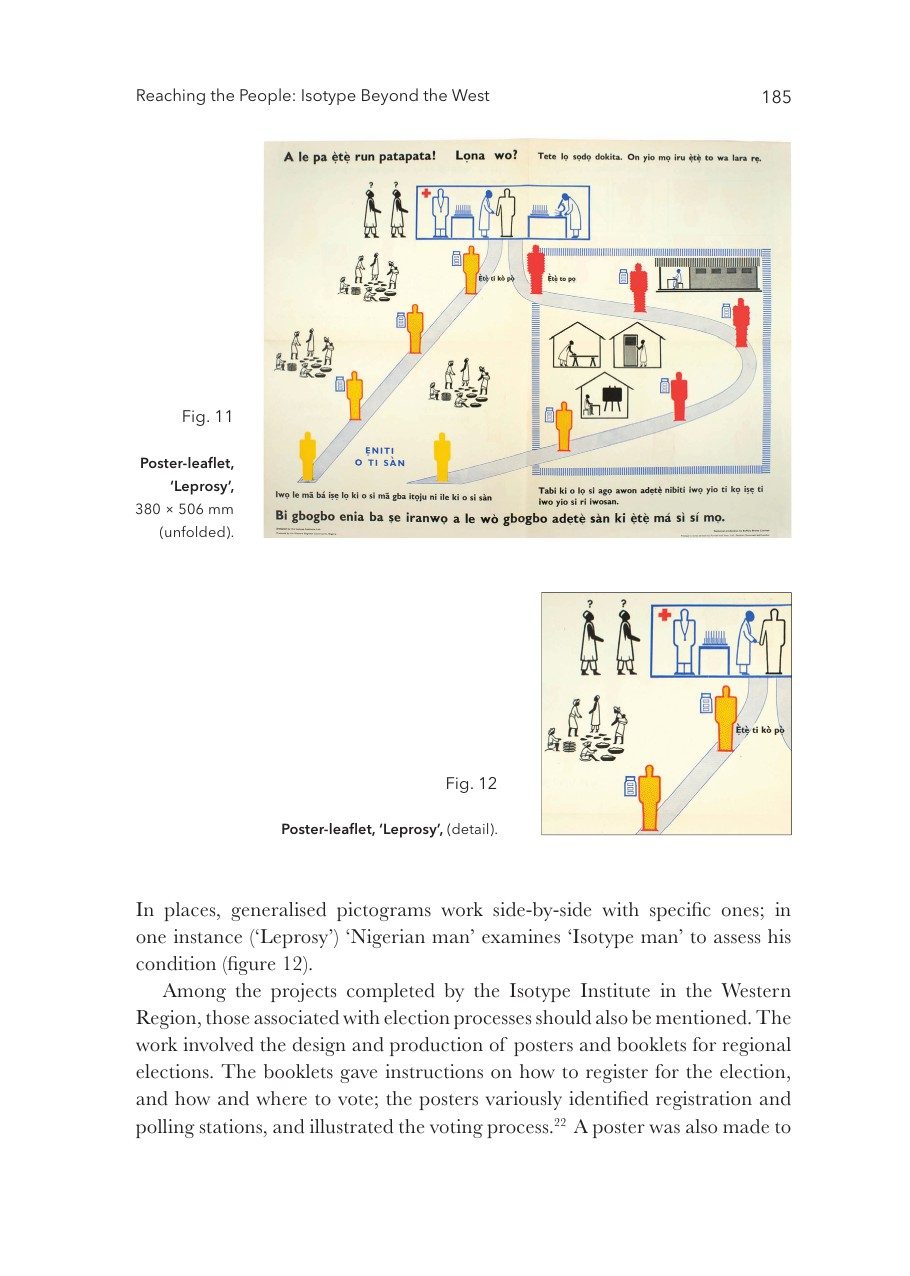
Research · Marie Neurath Chapter on Isotype Institute work in British West Africa between 1952 and 1958, chiefly Marie Neurath's 1954–55 commissions for the Western Region of Nigeria: 'White Paper' booklets on education, farming, health and taxation, health poster-leaflets in English and Yoruba, voting materials, and the failed plan for a local Visual Aids Office; discusses adapting pictograms to local figures and settings.
- Author
- Kindel, Eric
- Publisher
- ontos Verlag
- Year
- 2011
- Language
- English
- Text
- From the PDF, searchable
Text on page 1
Reaching the People:
 Isotype Beyond the West

 Eric Kindel, Reading

The potential of Isotype for communicating to diverse, international
audiences is generally attributed to the simplified imagery it employed to
produce compelling and easily understood visual explanations. While it
frequently supported and was supported by verbal language, Isotype’s
‘picture language’ circumvented linguistic complexities and the obstacles
to communication they created.1 The emphasis placed on the international
application of Isotype is embedded in its name and in the title of Otto
Neurath’s International picture language, the book that describes Isotype most
fully.2 But how effective was Isotype when deployed beyond the modernised
West where it was mainly used? An answer does not come readily to hand
since very few opportunities arose to test it in the developing, non-Western
world during more than four decades of Isotype activity. One opportunity,
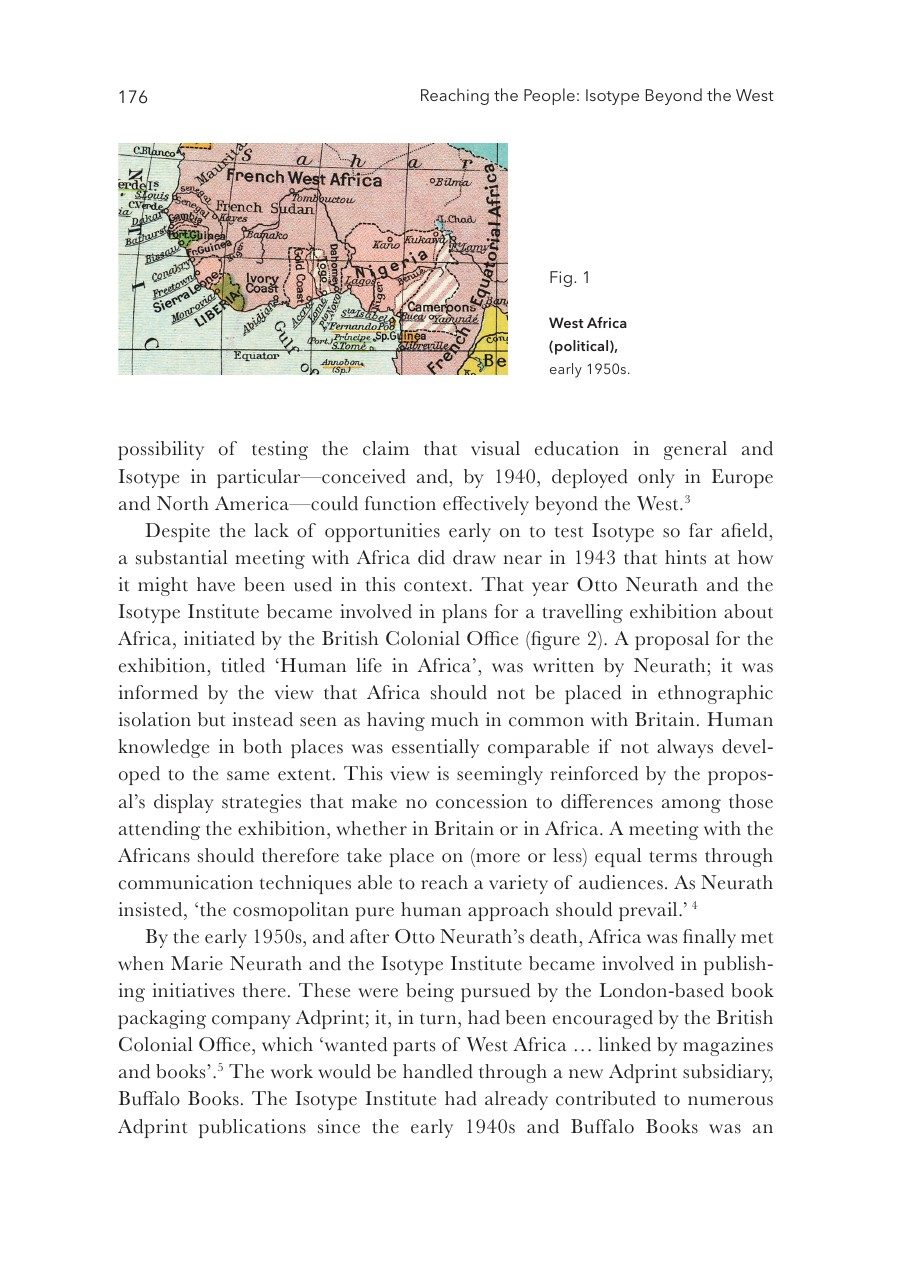
however, did arise through work in British colonial West Africa. Between
1952 and 1958 commissions were undertaken in Sierra Leone, Nigeria and
the Gold Coast (Ghana), countries then moving towards independence
(figure 1). Those in Nigeria, for its Western Regional Government, were
the most substantial and provide some evidence of how Isotype fared at the
further reaches of the international sphere its inventors hoped it might serve.
 Before the Isotype Institute
Archive ID re-article-pdf-2192-5258-1-pb-1 · Deep zoom and record · Request removal