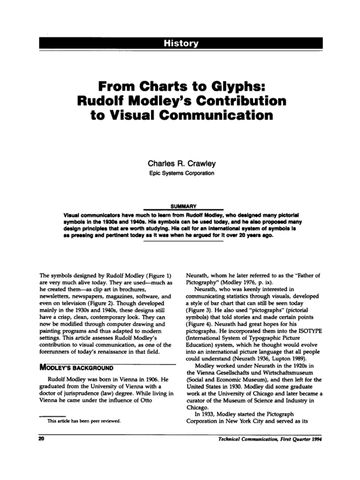
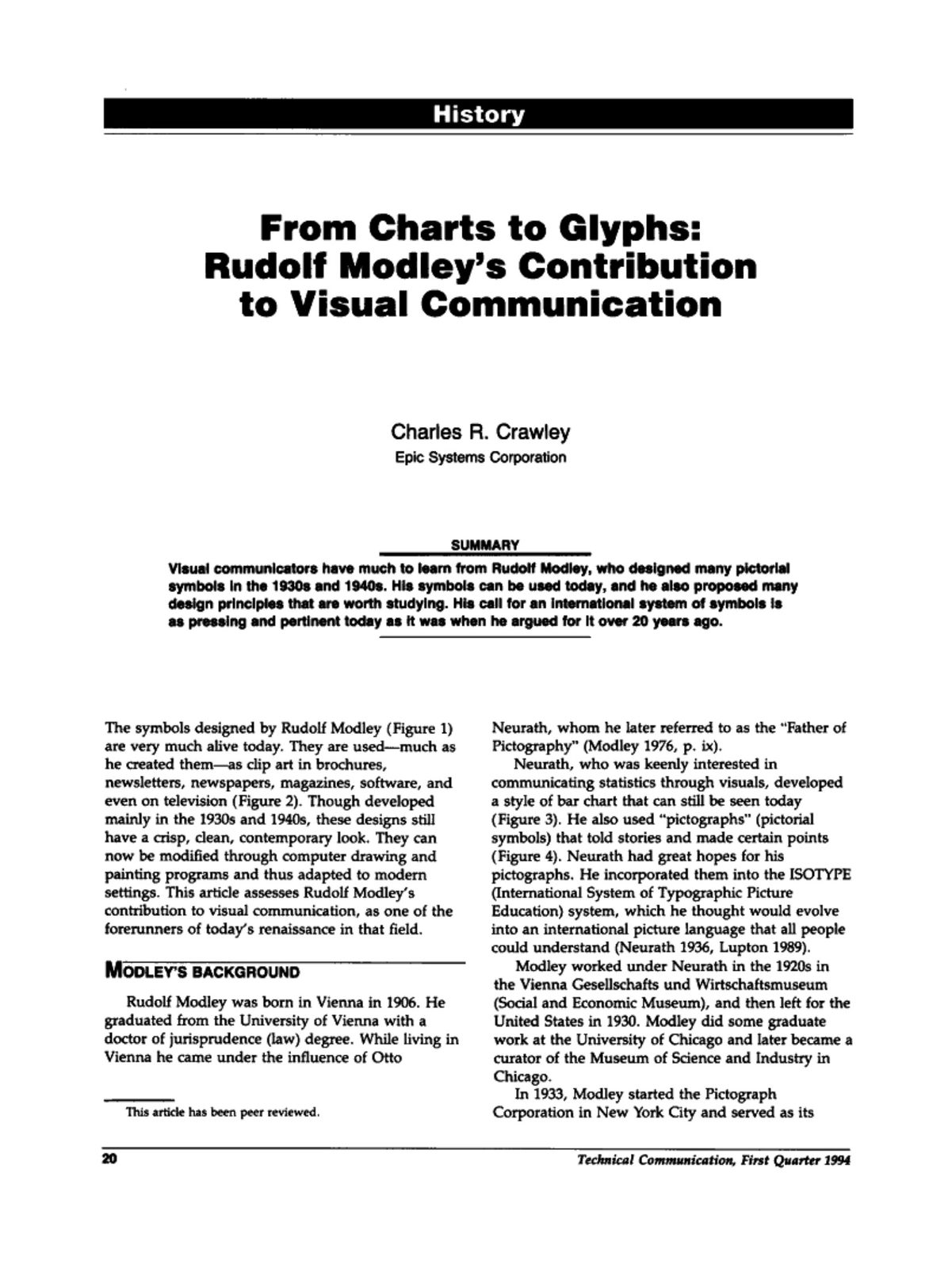
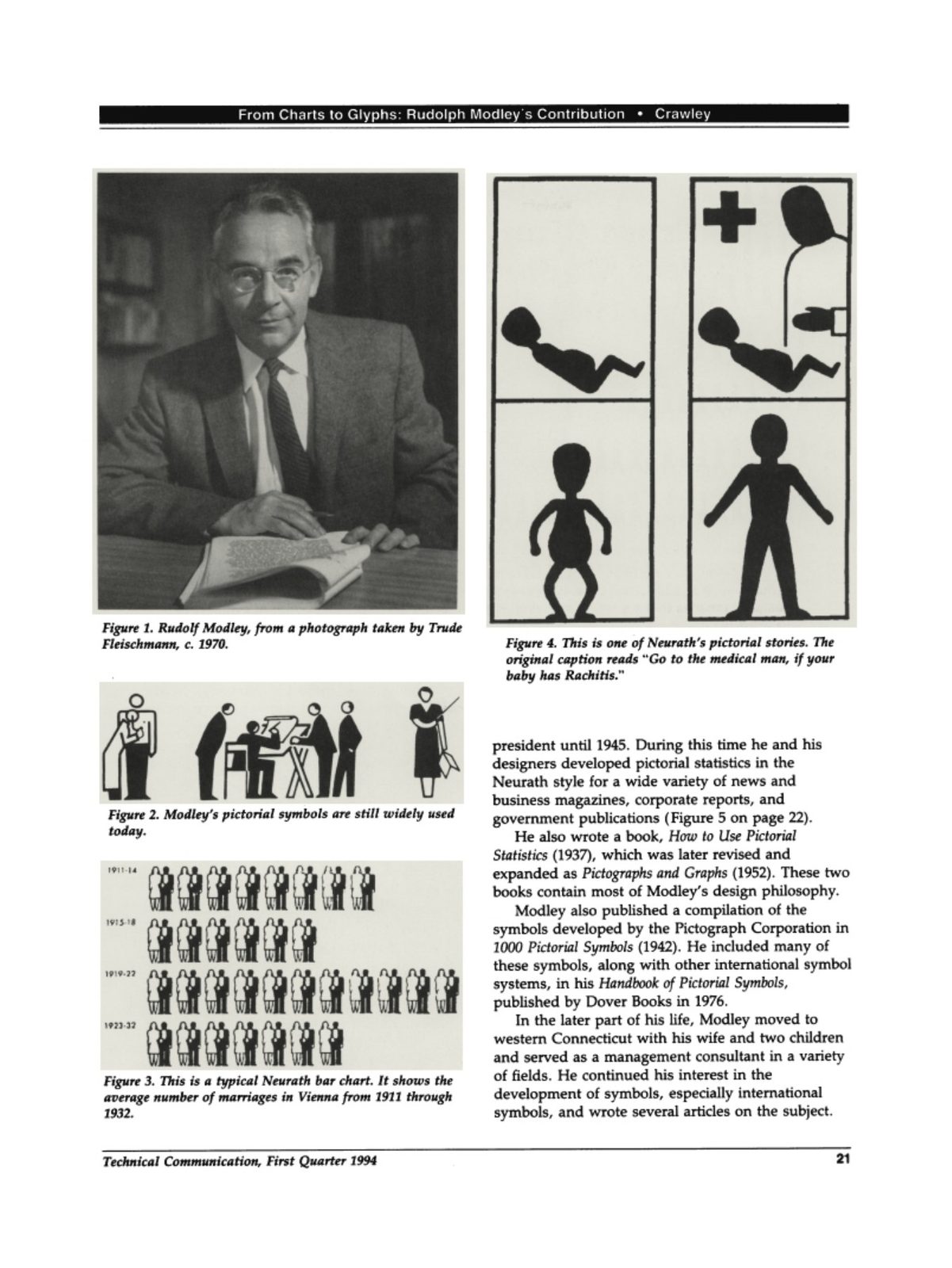
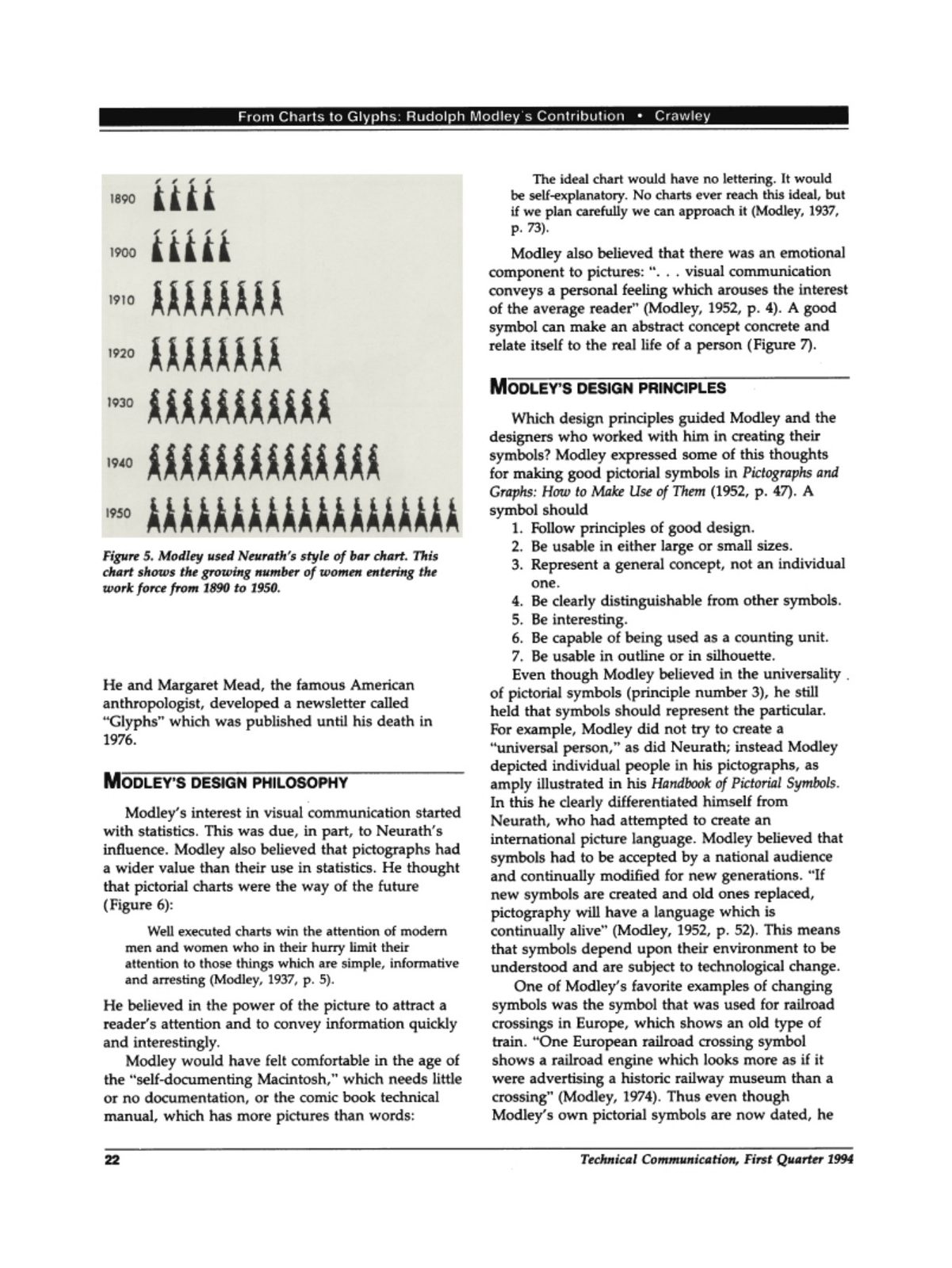
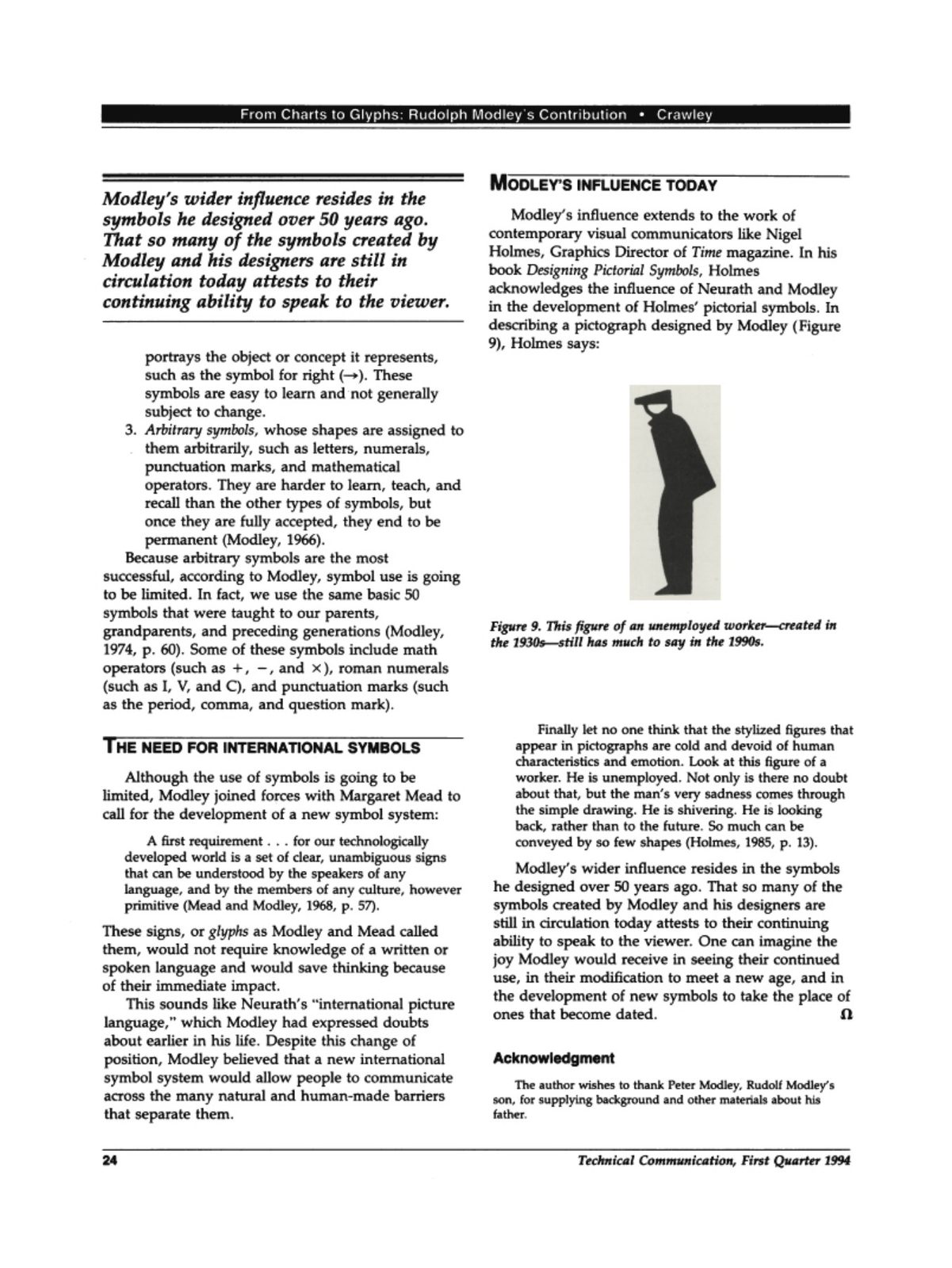
Research · General Assesses Rudolf Modley's work: his time under Neurath at the Vienna museum, the Pictograph Corporation in New York from 1933, his books How to Use Pictorial Statistics (1937), Pictographs and Graphs (1952) and Handbook of Pictorial Symbols (1976), his design principles and three types of symbols, and his later Glyphs project with Margaret Mead. Reproduces a Neurath bar chart of marriages in Vienna 1911–1932 and a Modley chart of women entering the work force 1890–1950.
- Author
- Crawley, Charles R.
- Publisher
- Technical Communication
- Year
- 1994
- Language
- English
- Text
- OCR, searchable
Text on page 1
From Charts to Glyphs:
 Rudolf Modley’s Contribution
 to Visual Communication

 Charles R. Crawley
 Epic Systems Corporation

 SUMMARY.

 Visual communicators have much to learn from Rudott Modley, who designed many pictorial
 symbols In the 1830s and 1940s. His symbole can be used today, and he also proposed many
 design principles that are worth studying. His call for an Intemational system of symbols is
 ‘as pressing and pertinent today it was when he argued for It over 20 years ago.

‘The symbols designed by Rudolf Modley (Figure 1) Neurath, whom he later referred to as the " father of
are very much alive today. They are used—much as Pictography” (Modley 1976, p. ix)
hhe created them—as clip art in brochures, Neurath, who was keenly interested in
newsletters, newspapers, magazines, software, and communicating statistics through visuals, developed
even on television (Figure 2). Though developed a style of bar chart that can still be seen today
mainly in the 1930s and 1940s, these designs stil (Figure 3). He also used “pictographs" (pictorial
have a crisp, clean, contemporary look. They can symbols) that told stories and made certain points
now be modified through co
Archive ID re-article-pdf-binder2 · Deep zoom and record · Request removal