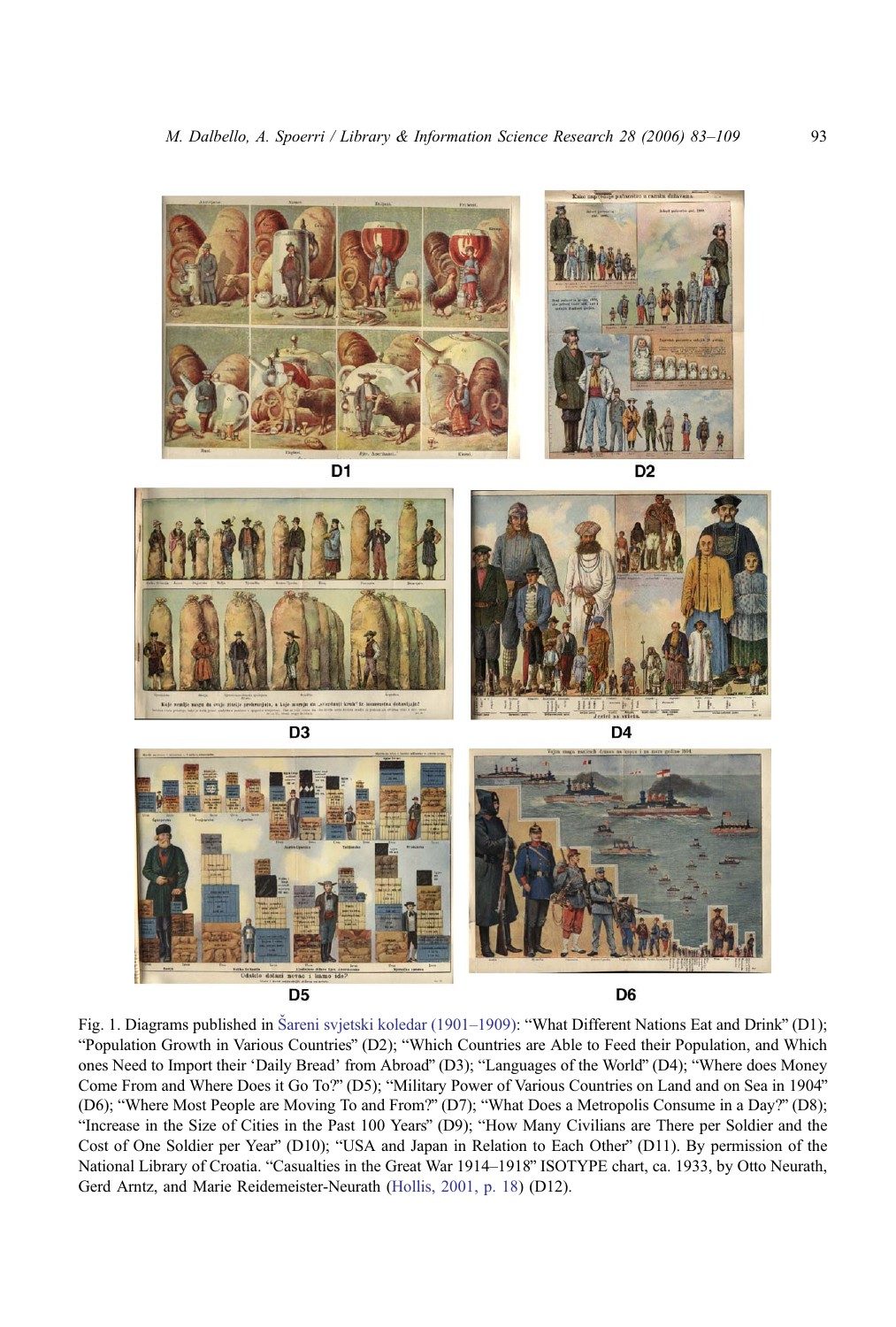
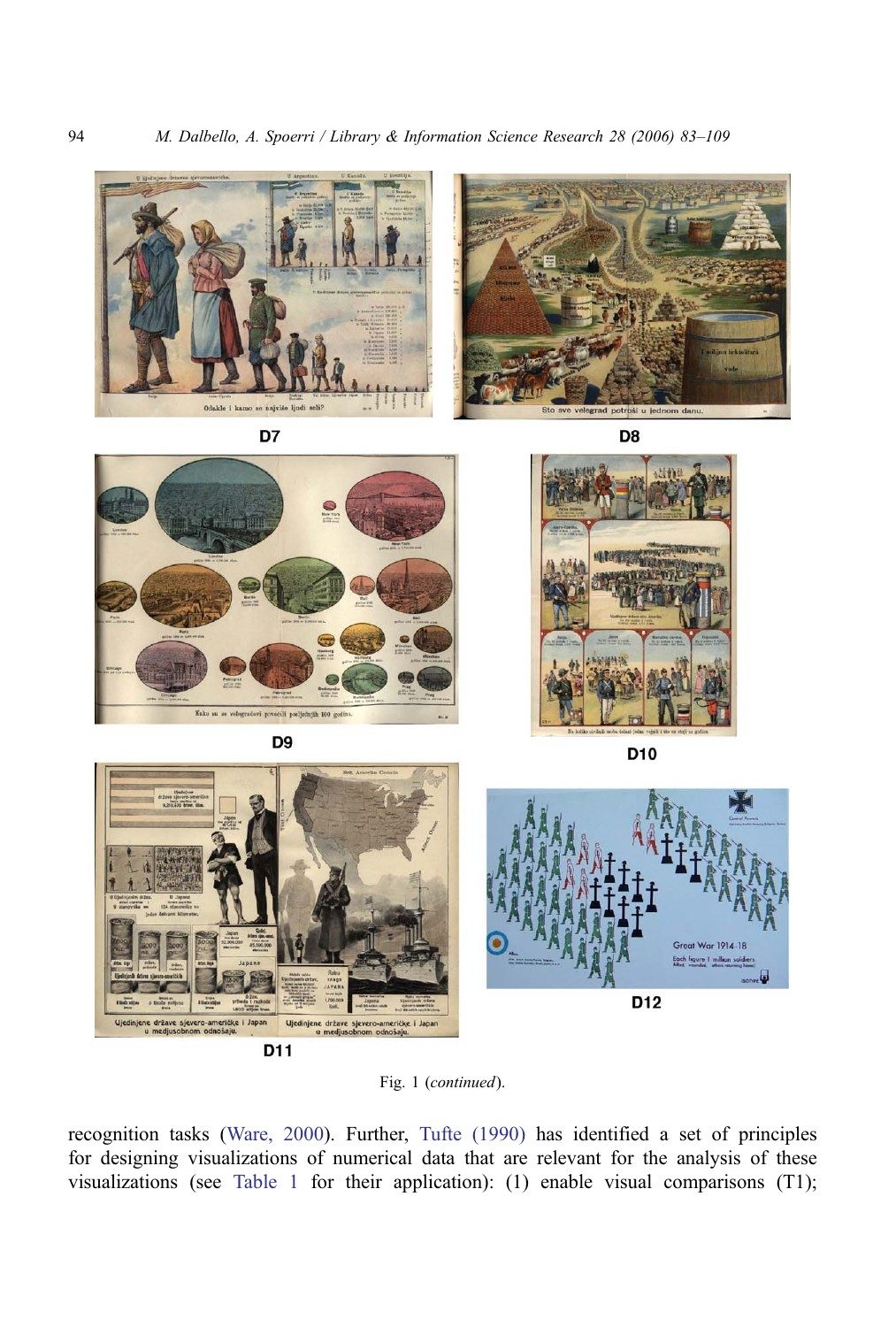
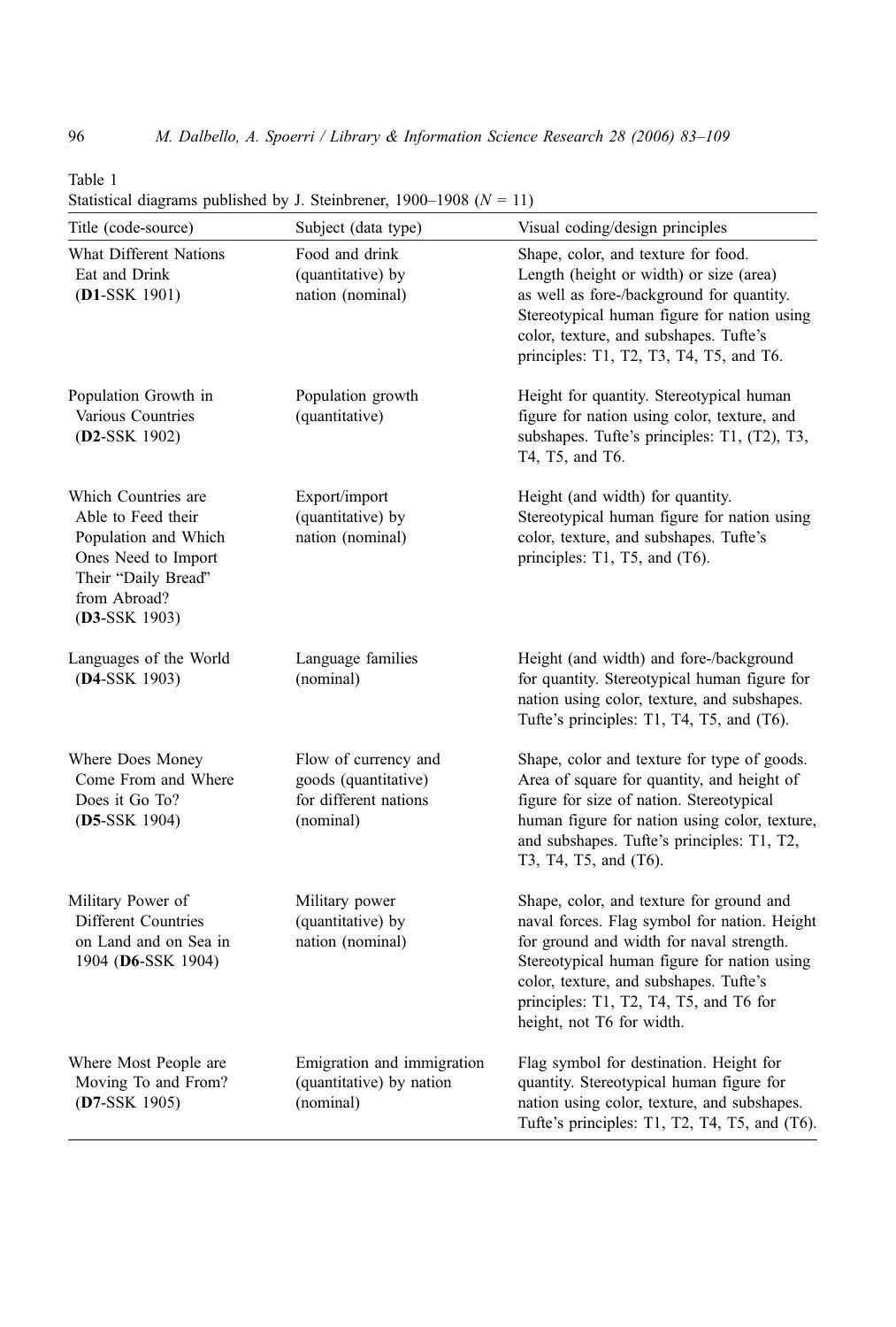
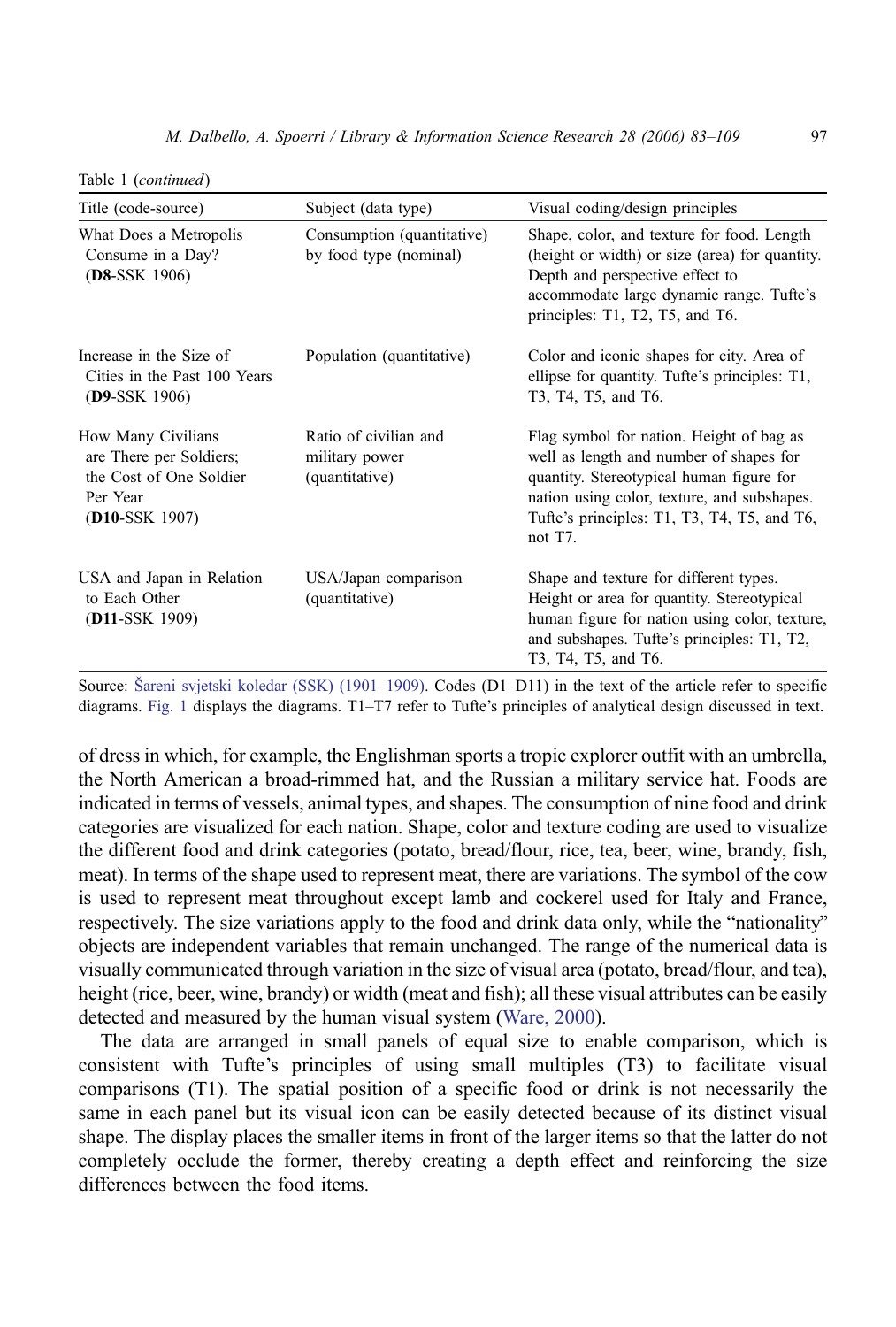
Research · Visual language Analyses statistical diagrams in popular almanacs of the late Habsburg Empire as an early prototype of visualising statistics for the public, examining their rhetoric, pragmatics and semantics, and argues they show sound functional design before the positivist design associated with Isotype.
- Author
- Dalbello, Marija; Spoerri, Anselm
- Publisher
- Library & Information Science Research
- Year
- 2006
- Language
- English
- Text
- From the PDF, searchable
Text on page 1
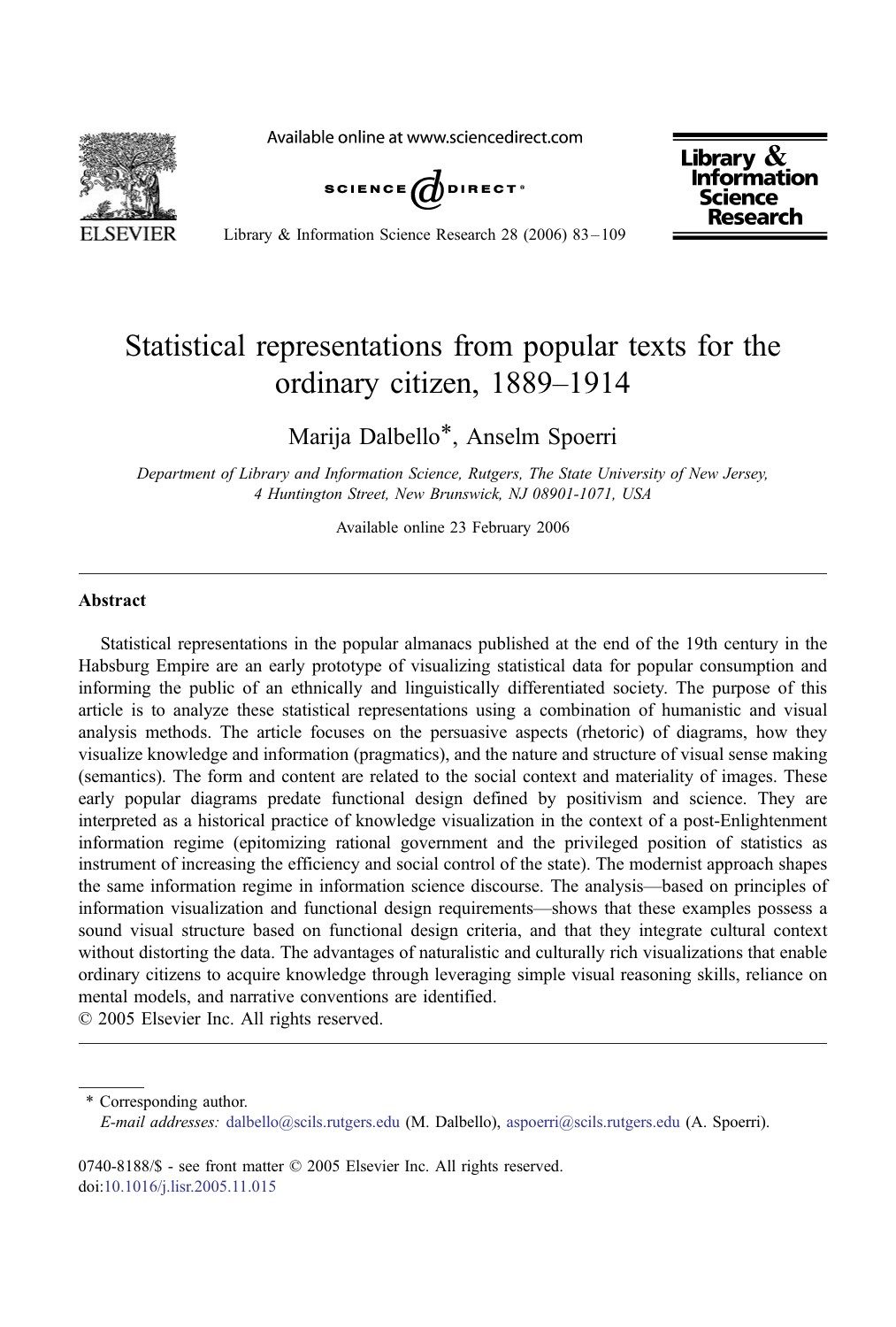
Library & Information Science Research 28 (2006) 83 – 109

 Statistical representations from popular texts for the
 ordinary citizen, 1889–1914
 Marija Dalbello4, Anselm Spoerri
 Department of Library and Information Science, Rutgers, The State University of New Jersey,
 4 Huntington Street, New Brunswick, NJ 08901-1071, USA

 Available online 23 February 2006

Abstract

 Statistical representations in the popular almanacs published at the end of the 19th century in the
Habsburg Empire are an early prototype of visualizing statistical data for popular consumption and
informing the public of an ethnically and linguistically differentiated society. The purpose of this
article is to analyze these statistical representations using a combination of humanistic and visual
analysis methods. The article focuses on the persuasive aspects (rhetoric) of diagrams, how they
visualize knowledge and information (pragmatics), and the nature and structure of visual sense making
(semantics). The form and content are related to the social context and materiality of images. These
early popular diagrams predate functional design defined by positivism and science. They are
interpreted as a historical practice of knowledge visualization in the context of a post-Enlightenment
information regime (epitomizing rational government and the privileged position of statistics as
in
Archive ID re-article-pdf-dalbellospoerri-statistical-representations-from-popular-texts-for-the-ordi · Deep zoom and record · Request removal