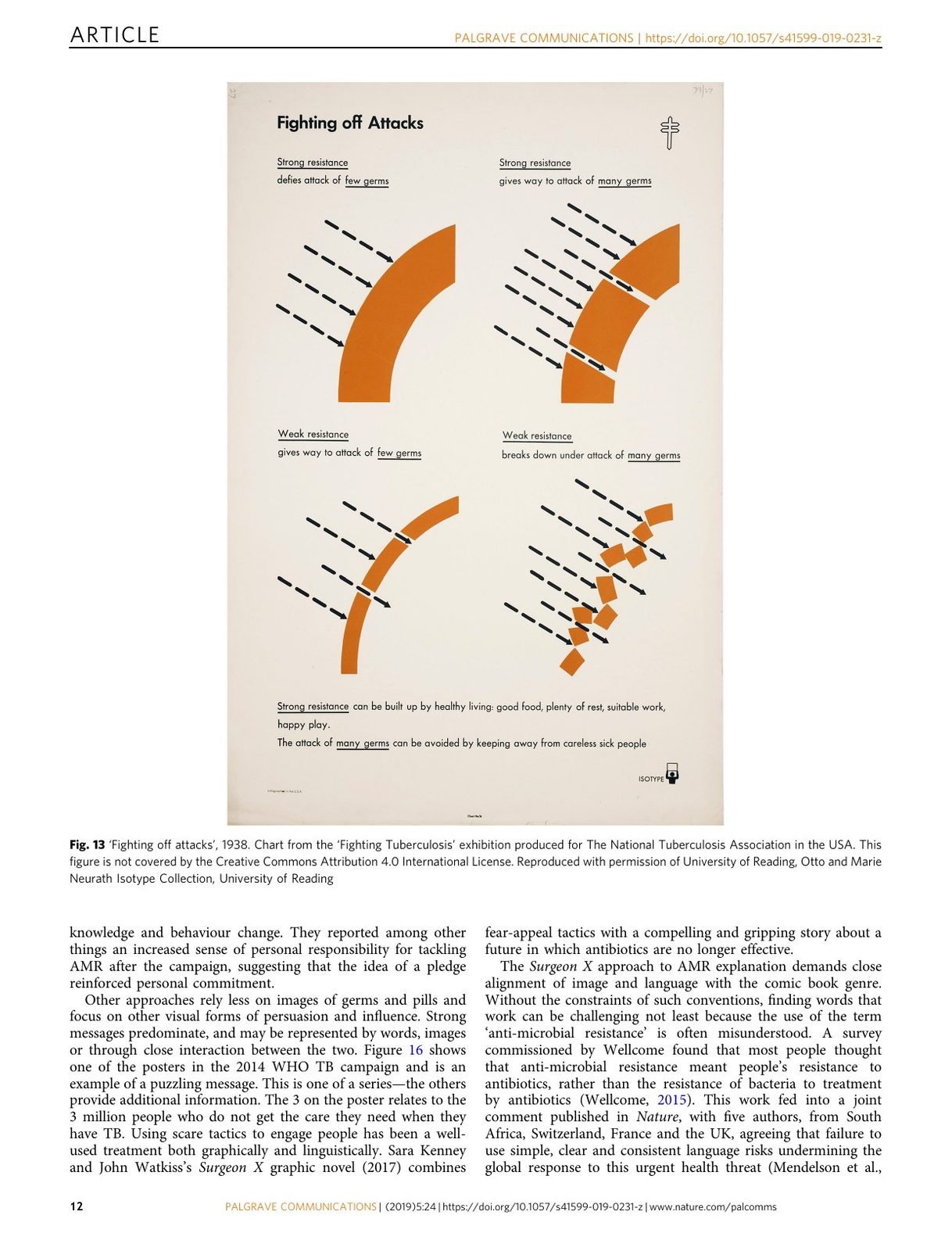
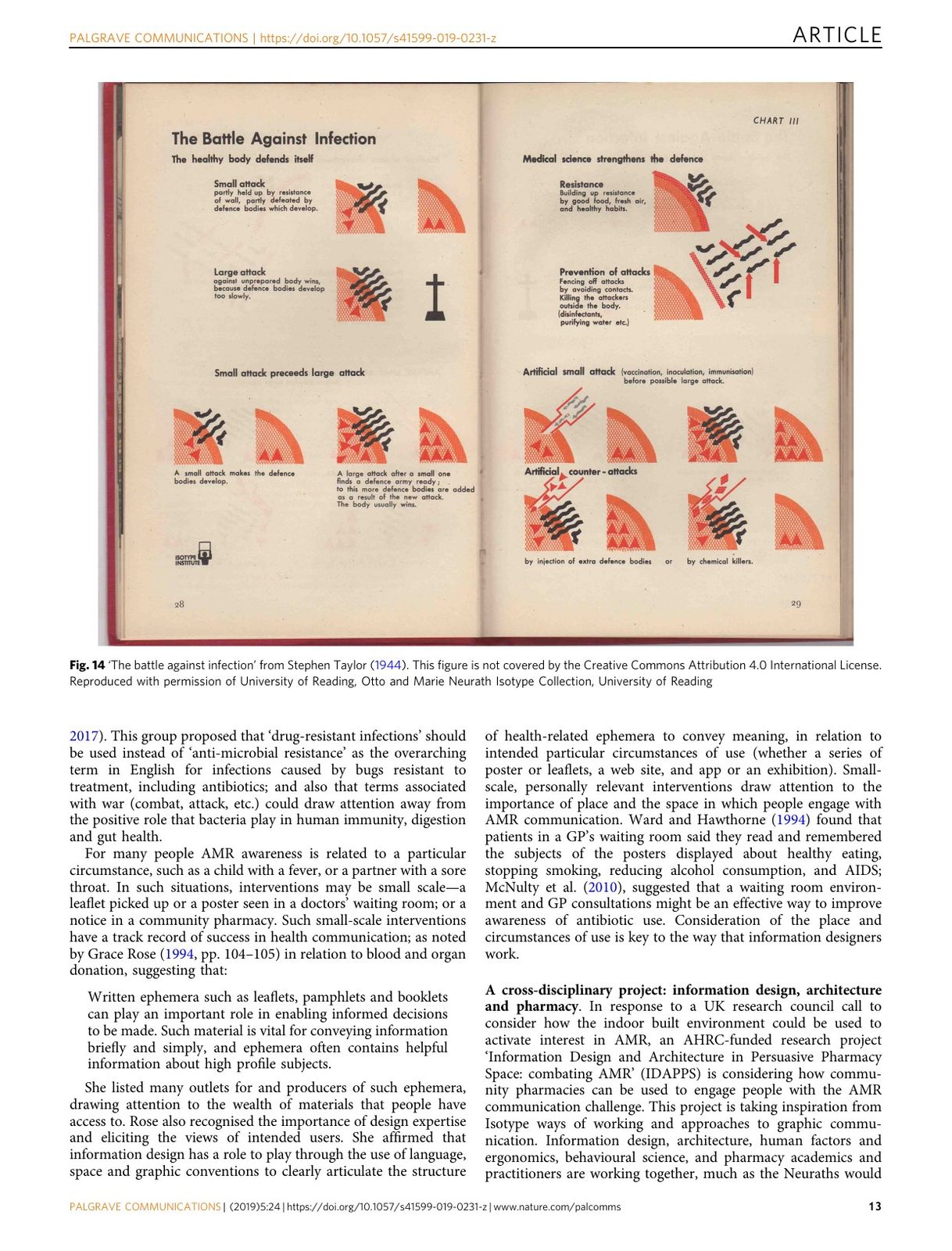
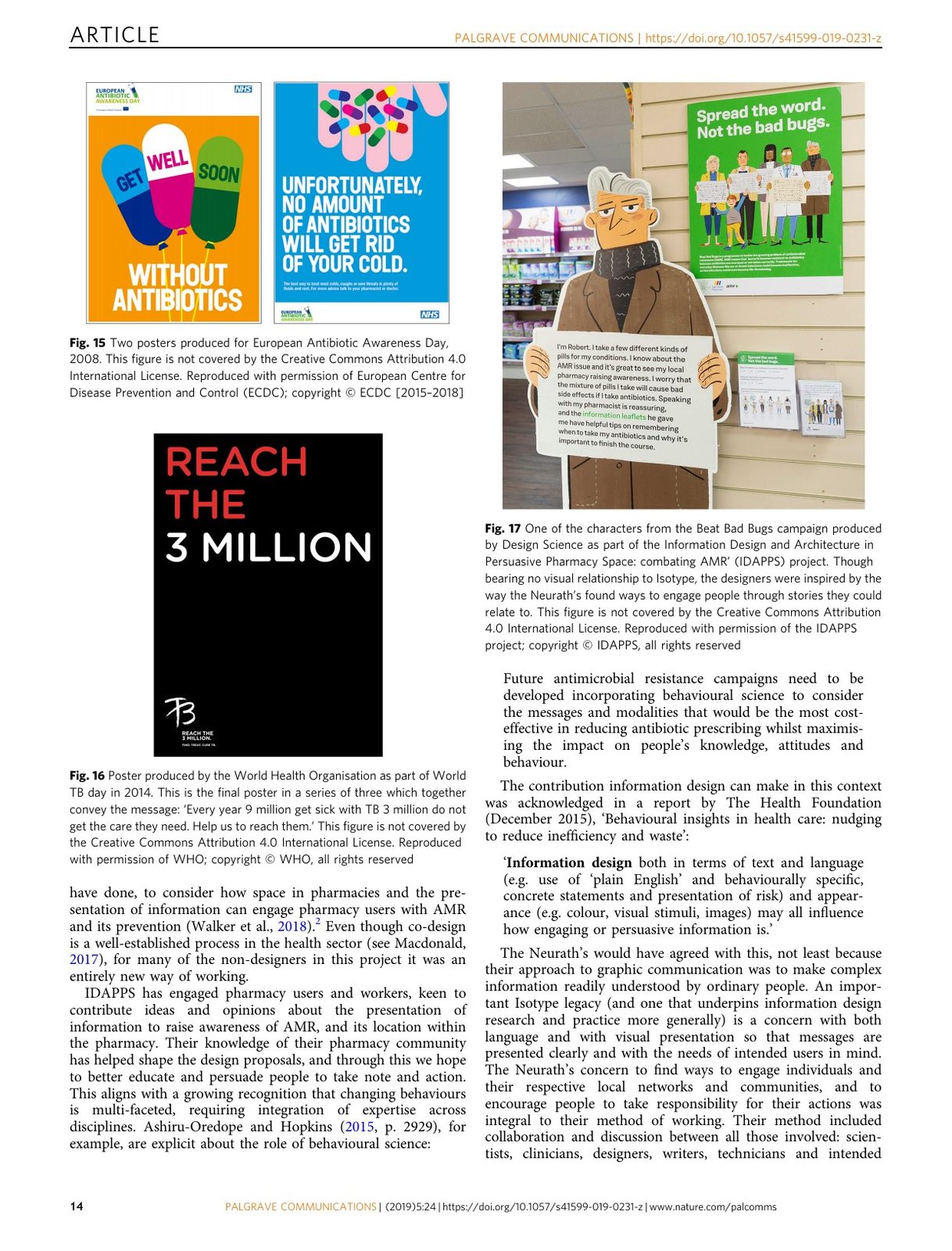
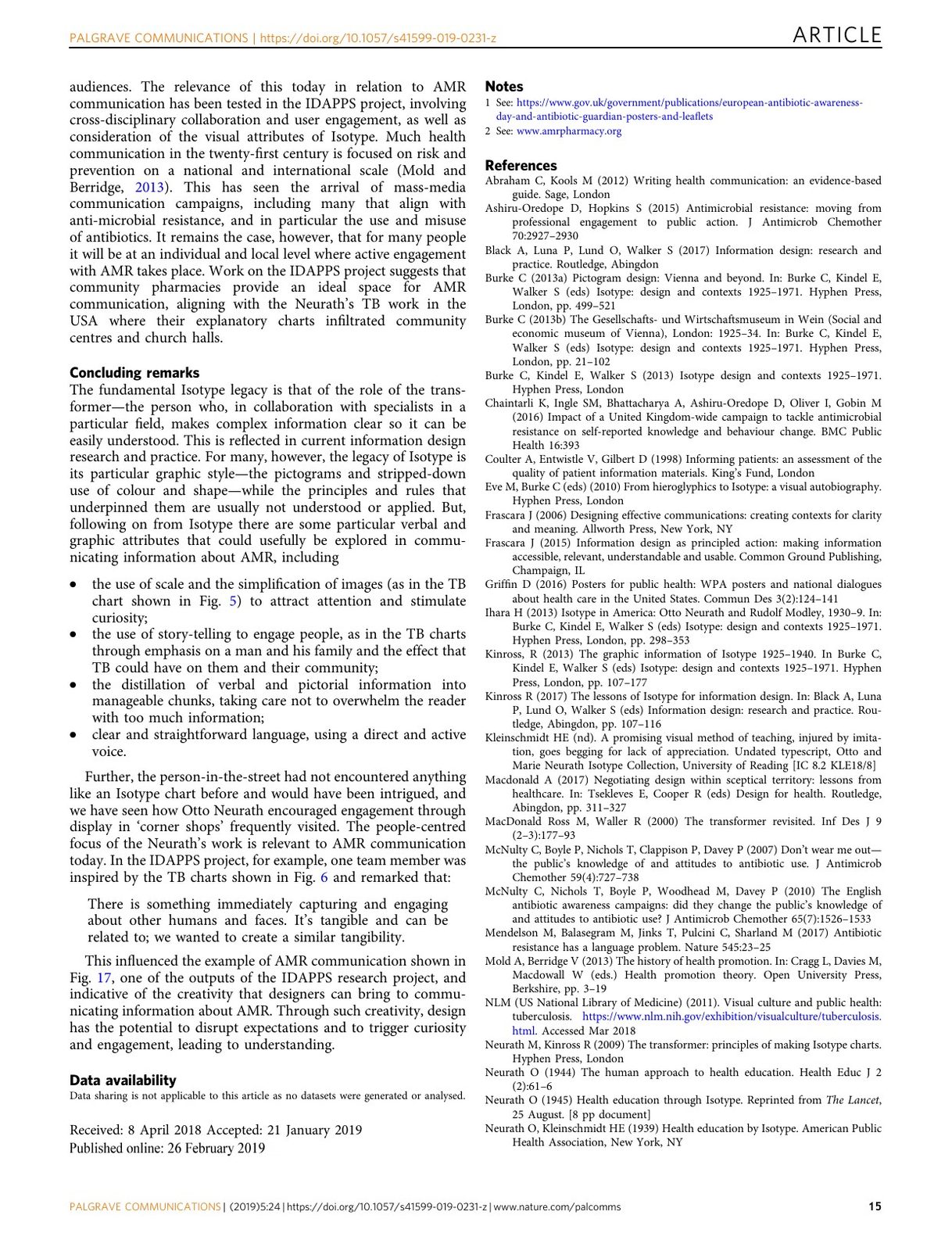
Research · Marie Neurath Argues that information design processes help communicate antimicrobial resistance, using the Neuraths' 1930s Isotype charts for the US National Tuberculosis Association and the role of the transformer as a model for accurate, audience-relevant health communication.
- Author
- Walker, Sue
- Publisher
- Palgrave Communications
- Year
- 2019
- Language
- English
- Text
- From the PDF, searchable
Text on page 1
ARTICLE
 https://doi.org/10.1057/s41599-019-0231-z OPEN

 Effective antimicrobial resistance communication:
 the role of information design
 Sue Walker 1

 ABSTRACT Getting the message across about the dangers of antimicrobial resistance
 (AMR) and how to prevent it is a global priority. This article discusses the role of information

1234567890():,;
 design in the effective communication of information about AMR, and suggests that the
 design process—user input, iteration and consideration of circumstances of use—is key to
 successful communication. To illustrate this, using material from the Otto and Marie Neurath
 Isotype Collection at the University of Reading, this article considers the work of Otto and
 Marie Neurath who developed the Isotype system for visual education in the 1920s. They
 collaborated with scientists, writers and illustrators to ensure that messages were both
 accurate and relevant for their intended audiences, so that people could make their own
 decisions based on factual explanation. Their use of pictograms and schematic illustrations,
 consistent use of colours to represent meaning, and carefully considered relationships
 between text and image provided
Archive ID re-article-pdf-effective-antimicrobial-resistance-communication-the-role-of-information-de · Deep zoom and record · Request removal