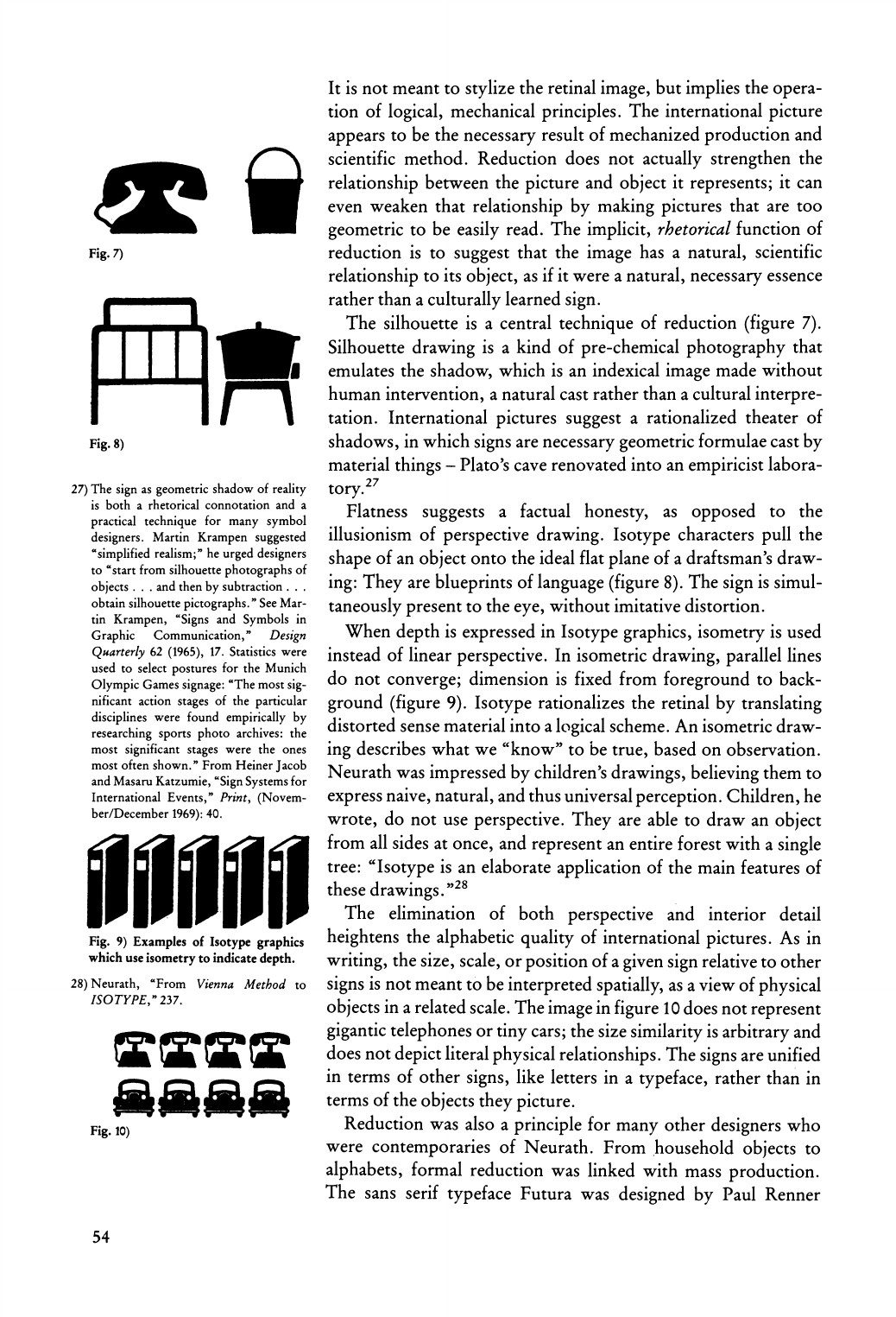
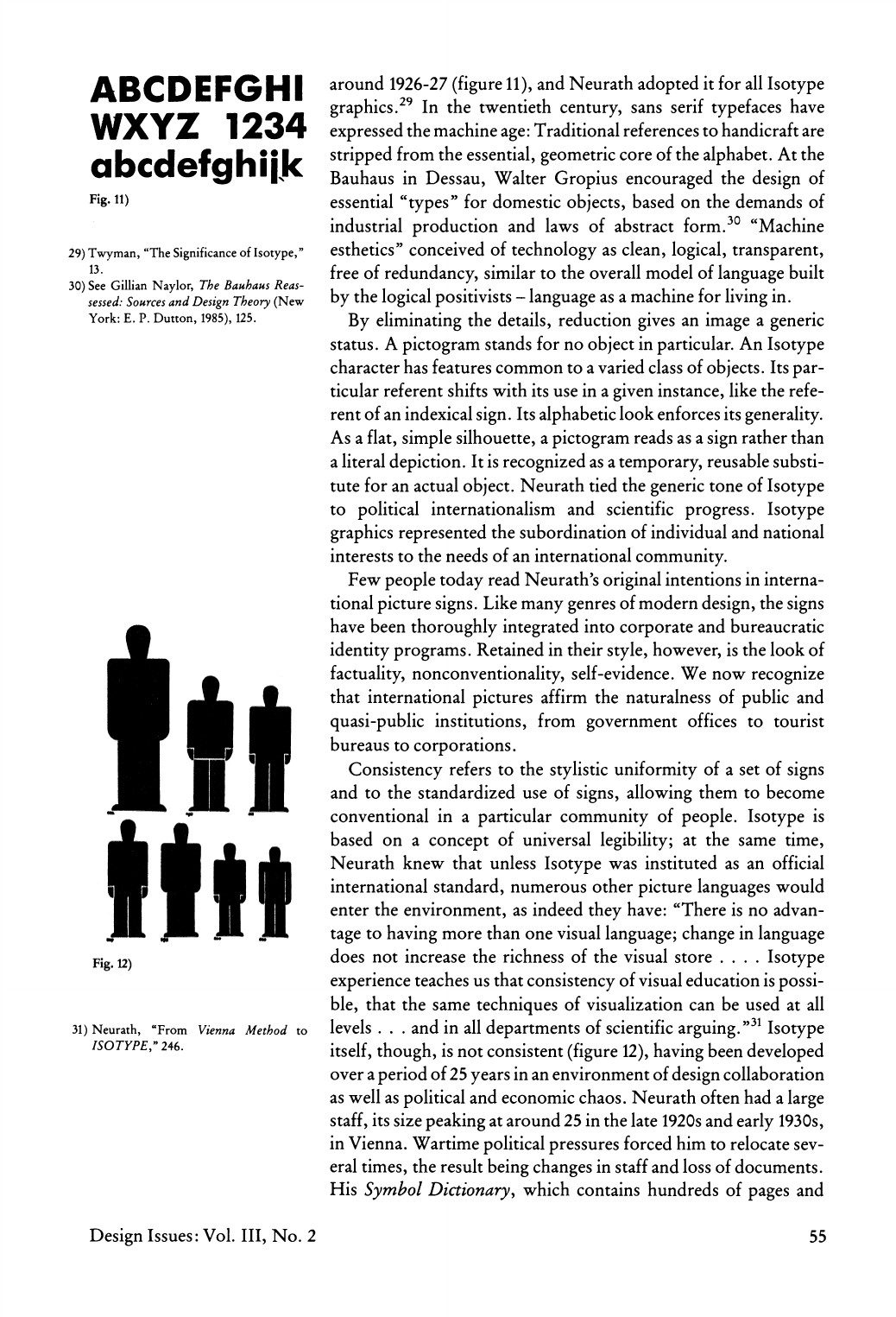
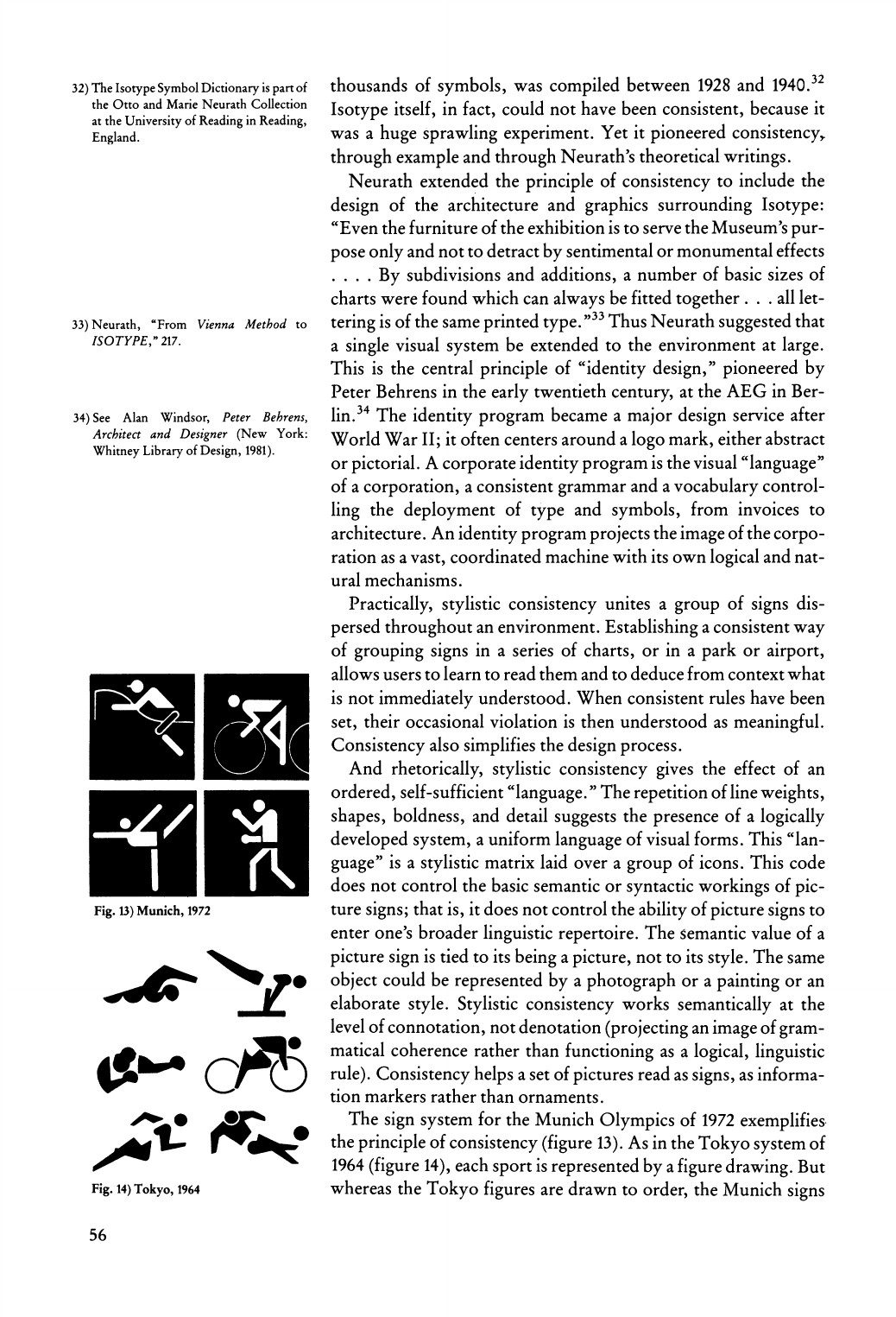
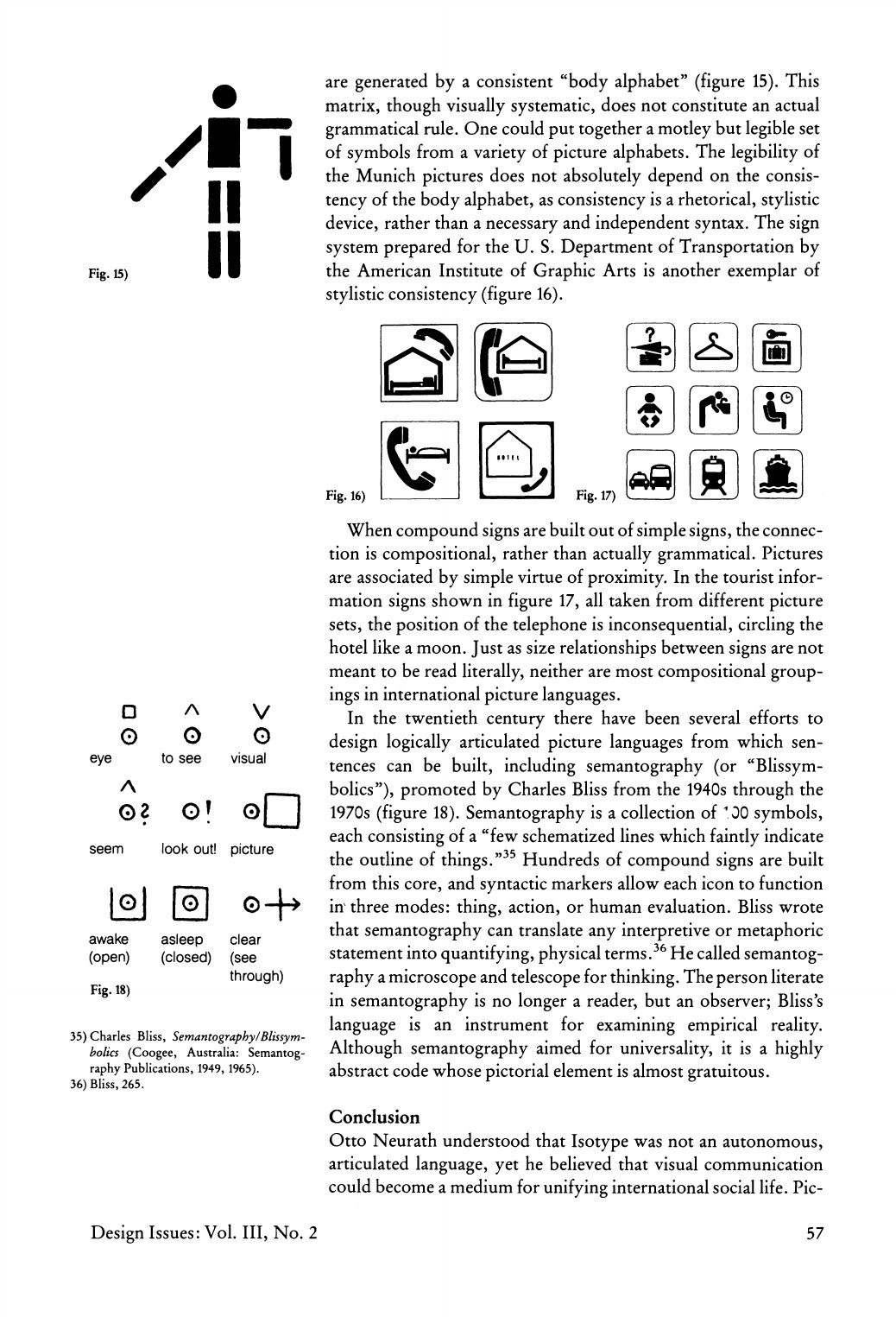
Research · Visual language Reads Isotype as a popular version of logical positivism, analysing its pictorial statistics and its rules of reduction and consistency, and argues that its claimed visual objectivity hides cultural convention, tracing its legacy in the Tokyo and Munich Olympic signs, the DOT/AIGA symbols and Blissymbolics.
- Author
- Lupton, Ellen
- Publisher
- Design Issues
- Year
- 1986
- Dating
- Estimated: Design Issues vol 3 no 2 (Fall 1986), per Scribd copy titled Lupton-1986; page text mentions a 1987 exhibition date likely OCR error (Research Lab dating, 2026-11-02)
- Language
- English
- Text
- From the PDF, searchable
Text on page 1
Ellen Lupton

 Reading Isotype

 This essay developed from the exhibitionIsotype' was developed by the Viennese philosopher and social
 "Global Signage: Semiotics and the Lan- scientist Otto Neurath beginning in the 1920s. The system uses
 guage of International Pictures,"
 organized by the Herb Lubalin Study simplified pictures to convey social and economic information to
 Center at The Cooper Union, New a general public and has been applied to sociological museums and
 York, in spring, 1987. Its present form is
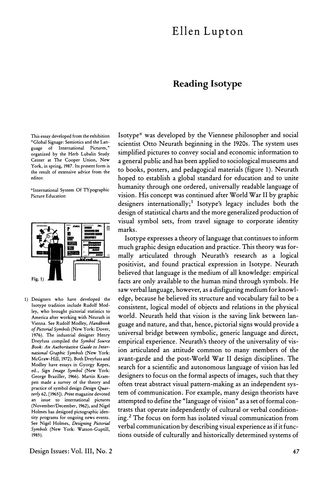
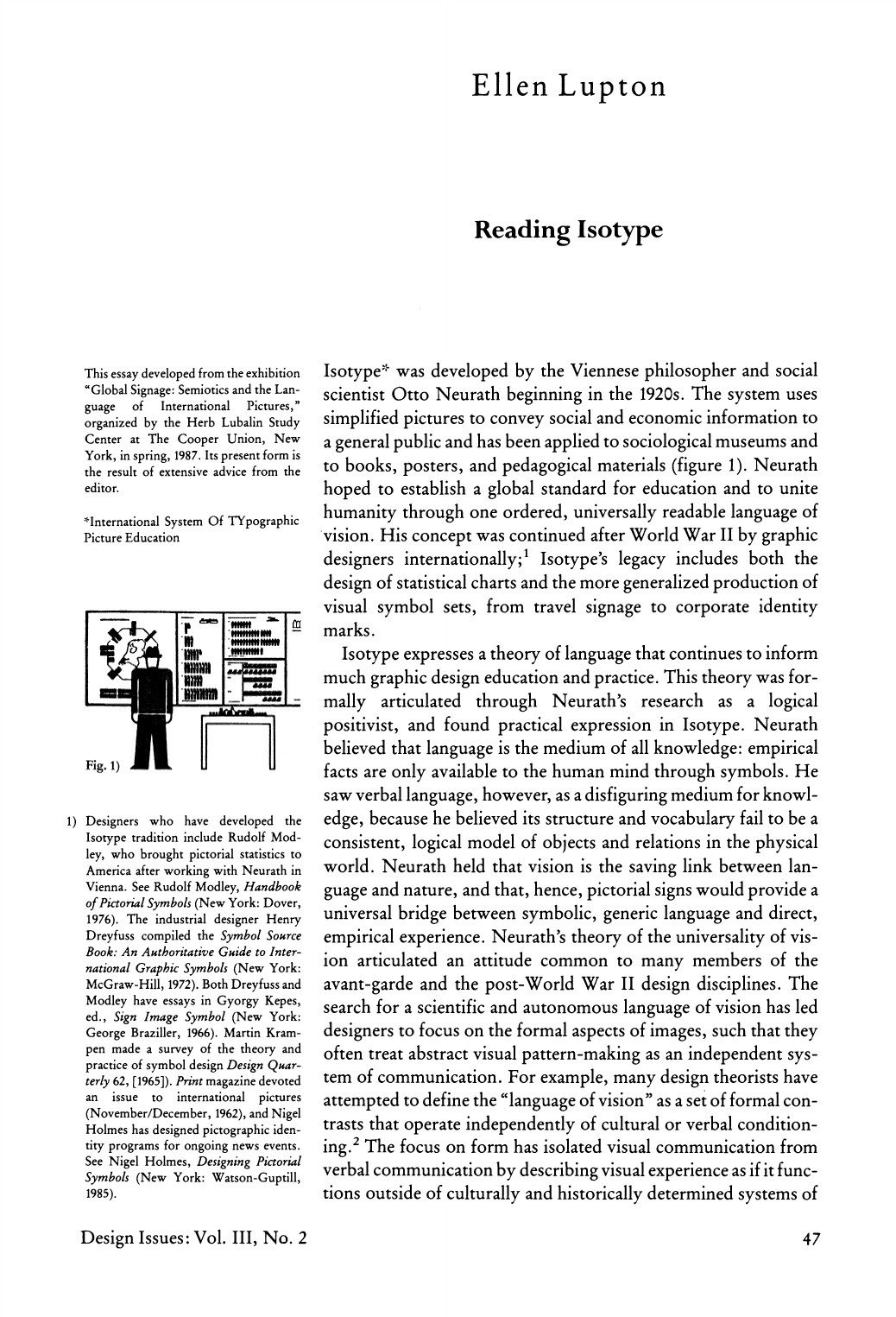
 the result of extensive advice from the to books, posters, and pedagogical materials (figure 1). Neurath
 editor.
 hoped to establish a global standard for education and to unite
 *International System Of TYpographic humanity through one ordered, universally readable language of
 Picture Education vision. His concept was continued after World War II by graphic
 designers internationally;1 Isotype's legacy includes both the
 design of statistical charts and the more generalized production of
 visual symbol sets, from travel signage to corporate identity
 marks.
 Isotype expresses a theory of language that continue
Archive ID re-article-pdf-reading-isotype-lupton-ellen · Deep zoom and record · Request removal