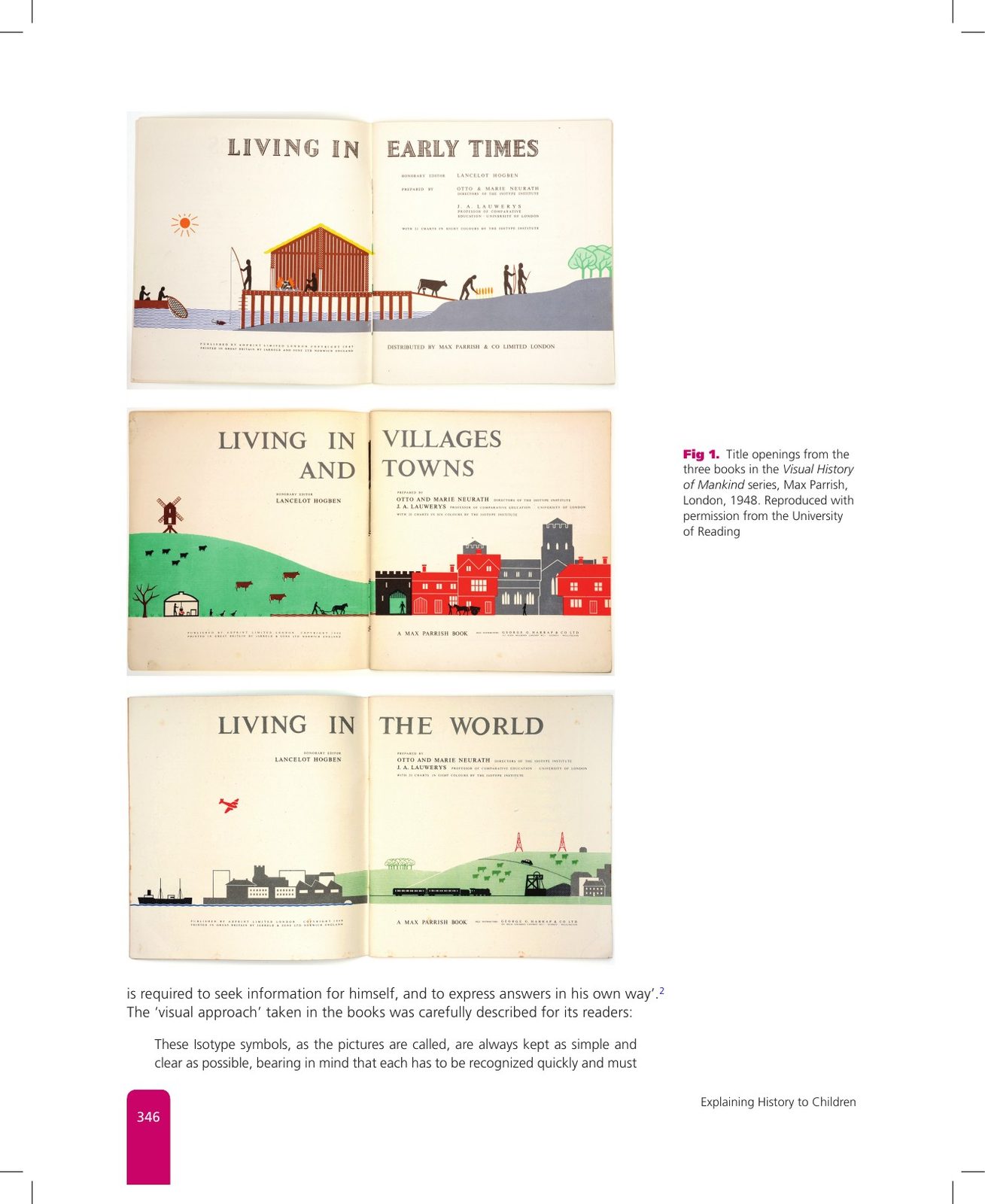
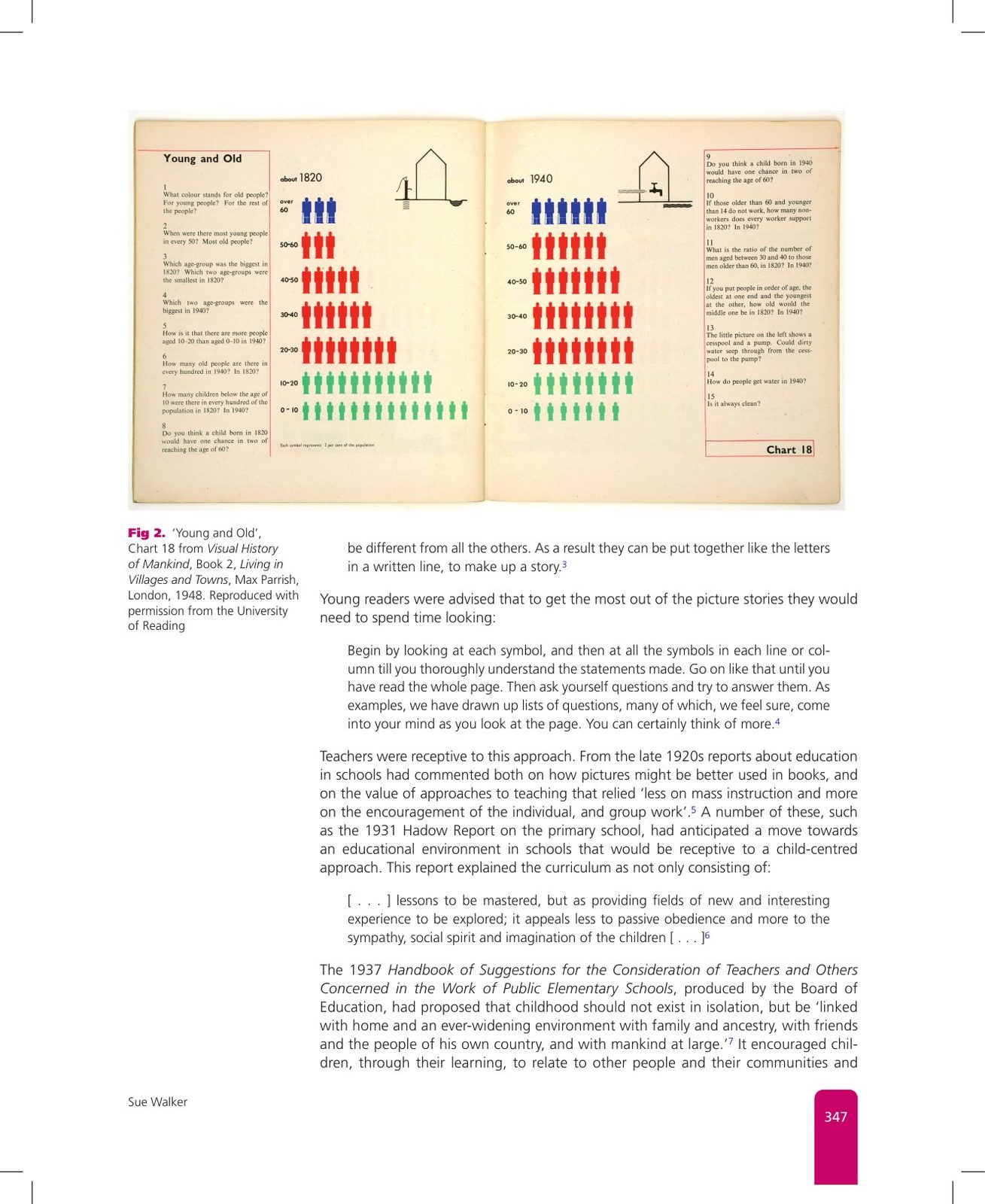
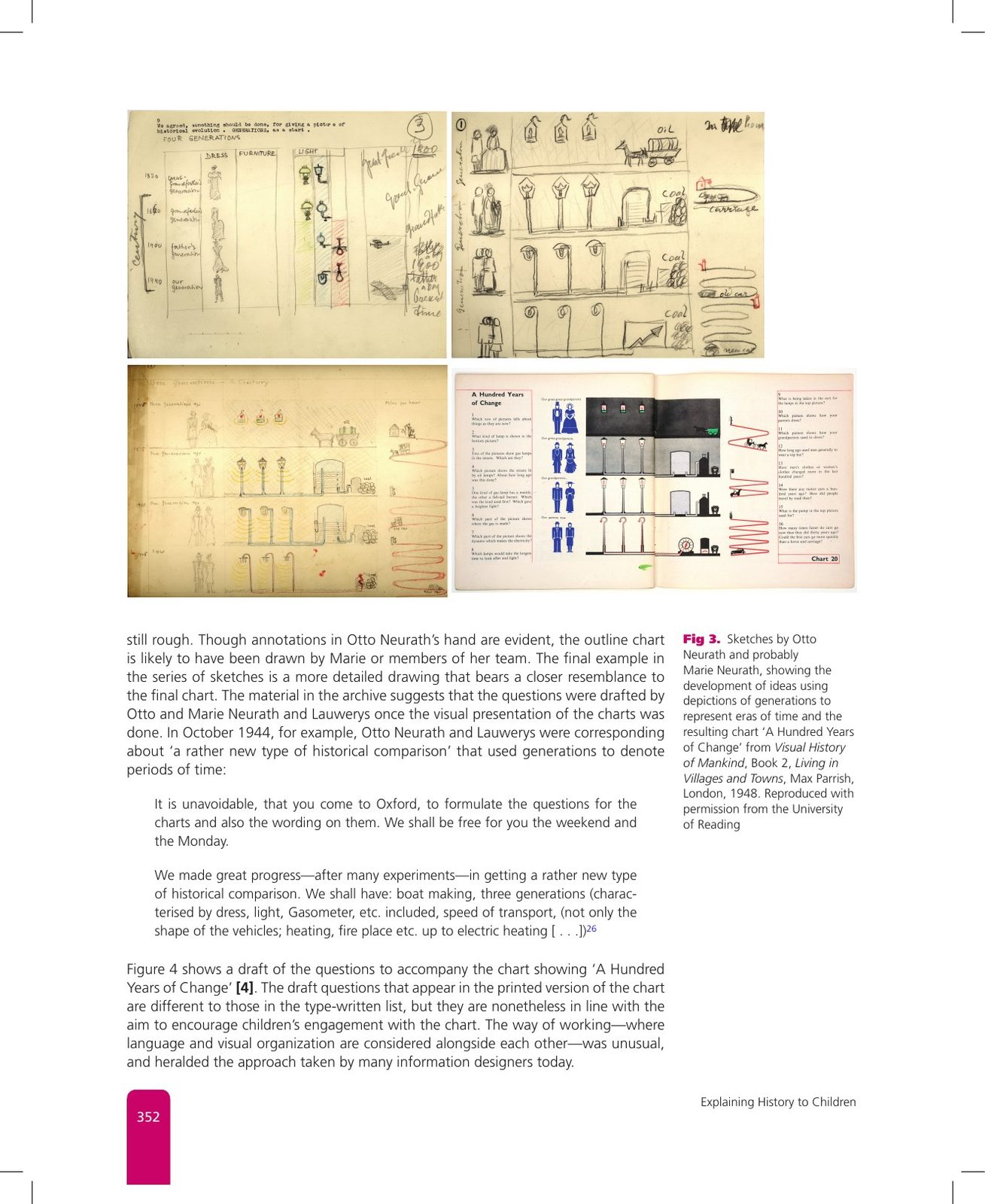
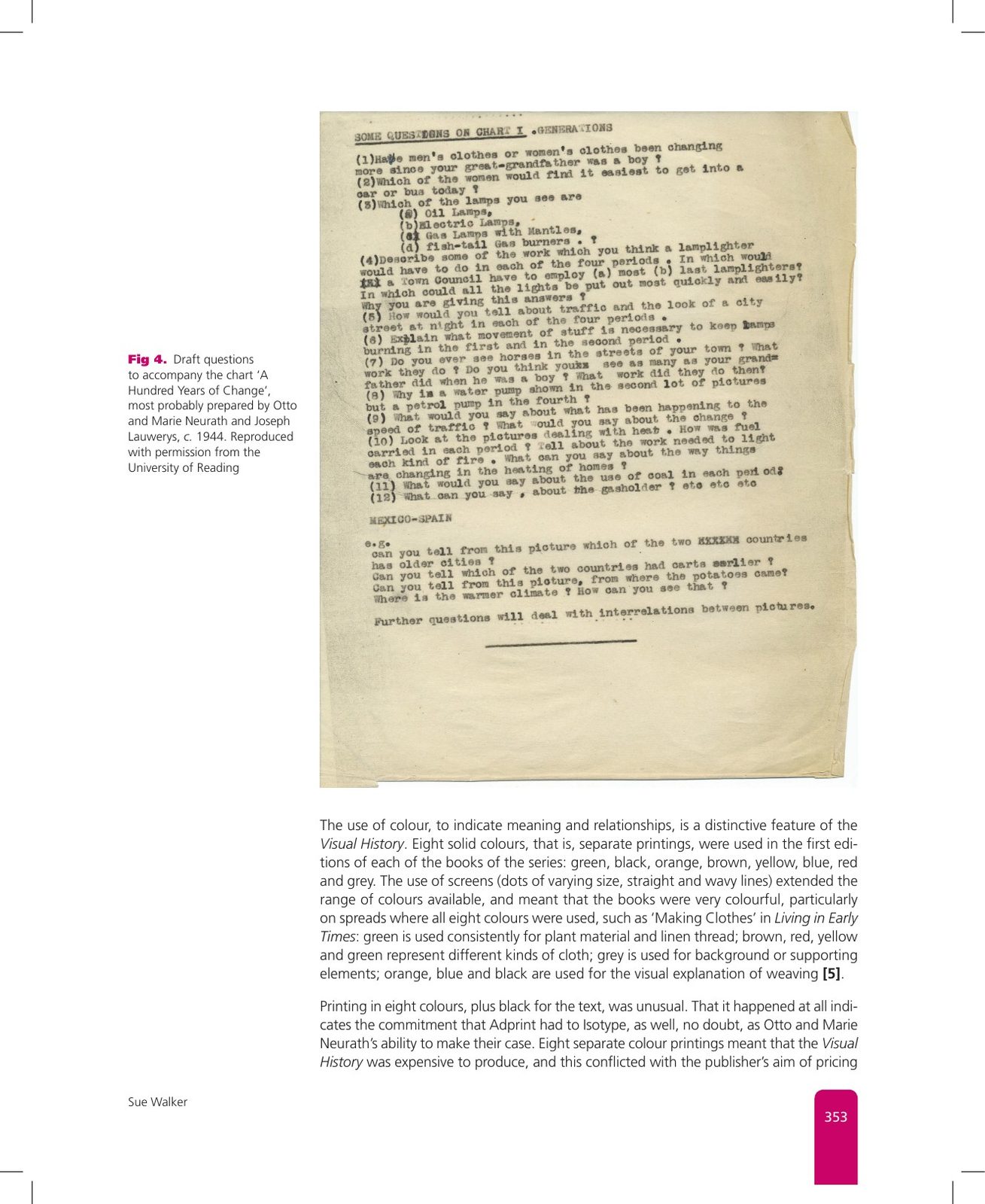
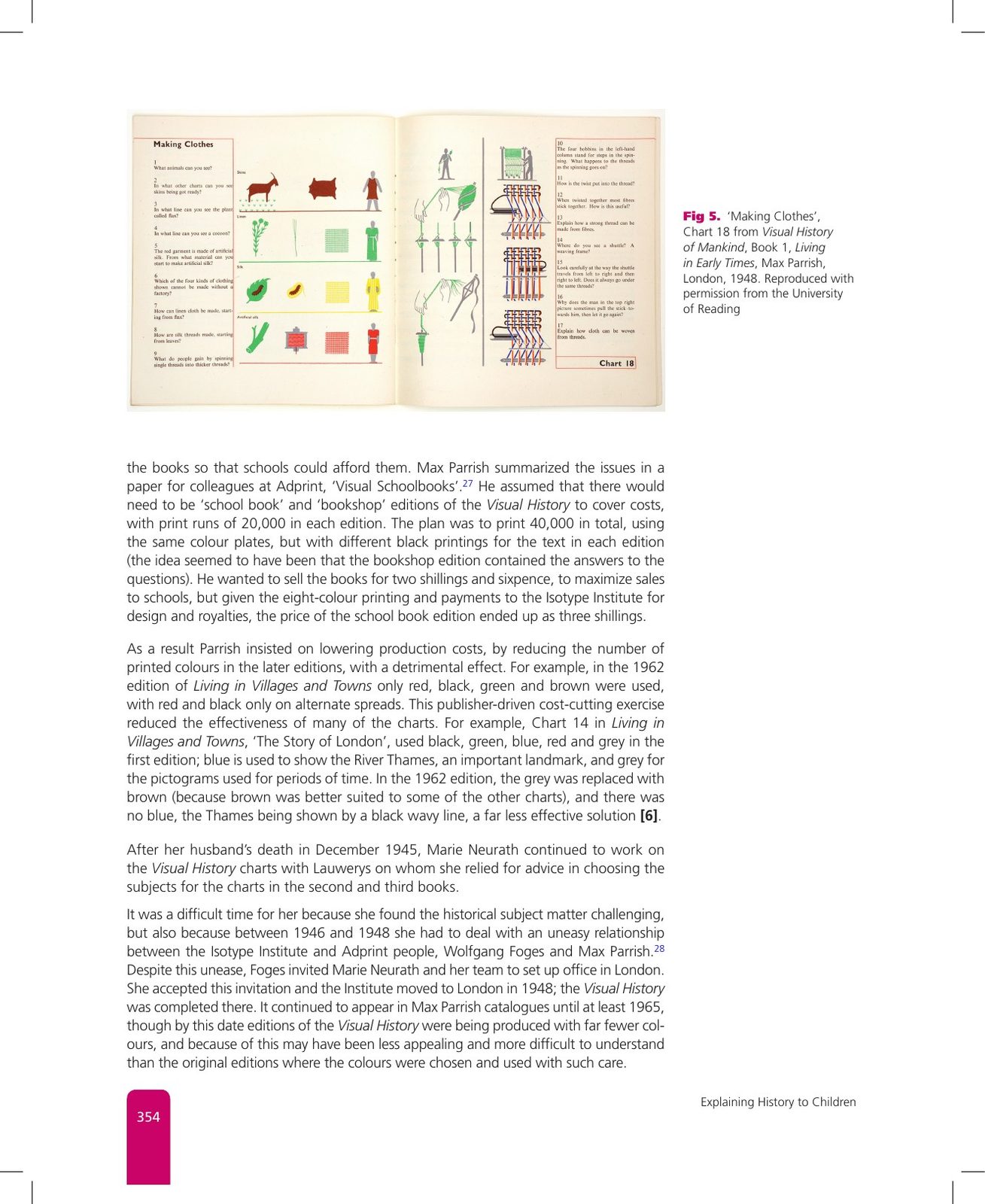
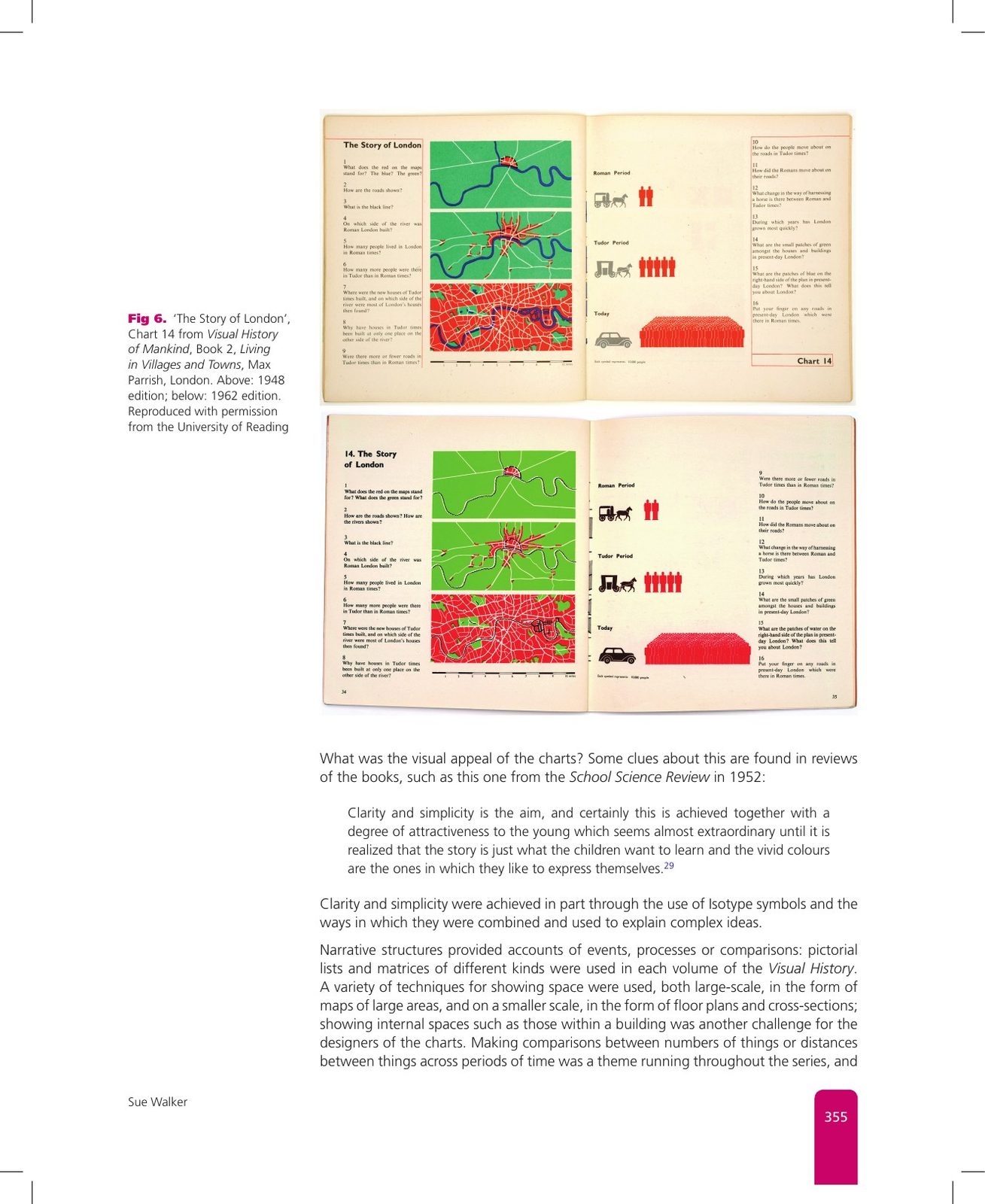
Research · Marie Neurath Traces the making of the Isotype Institute's three-volume Visual History of Mankind (Max Parrish, 1948) from Isotype Collection correspondence and sketches: the editorial committee with Lancelot Hogben and Joseph Lauwerys, the use of generations to convey historical time, eight-colour printing and later cost-cutting, and reviews from teachers and children.
- Author
- Walker, Sue
- Publisher
- Journal of Design History
- Year
- 2012
- Language
- English
- Text
- From the PDF, searchable
Text on page 1
doi:10.1093/jdh/eps031
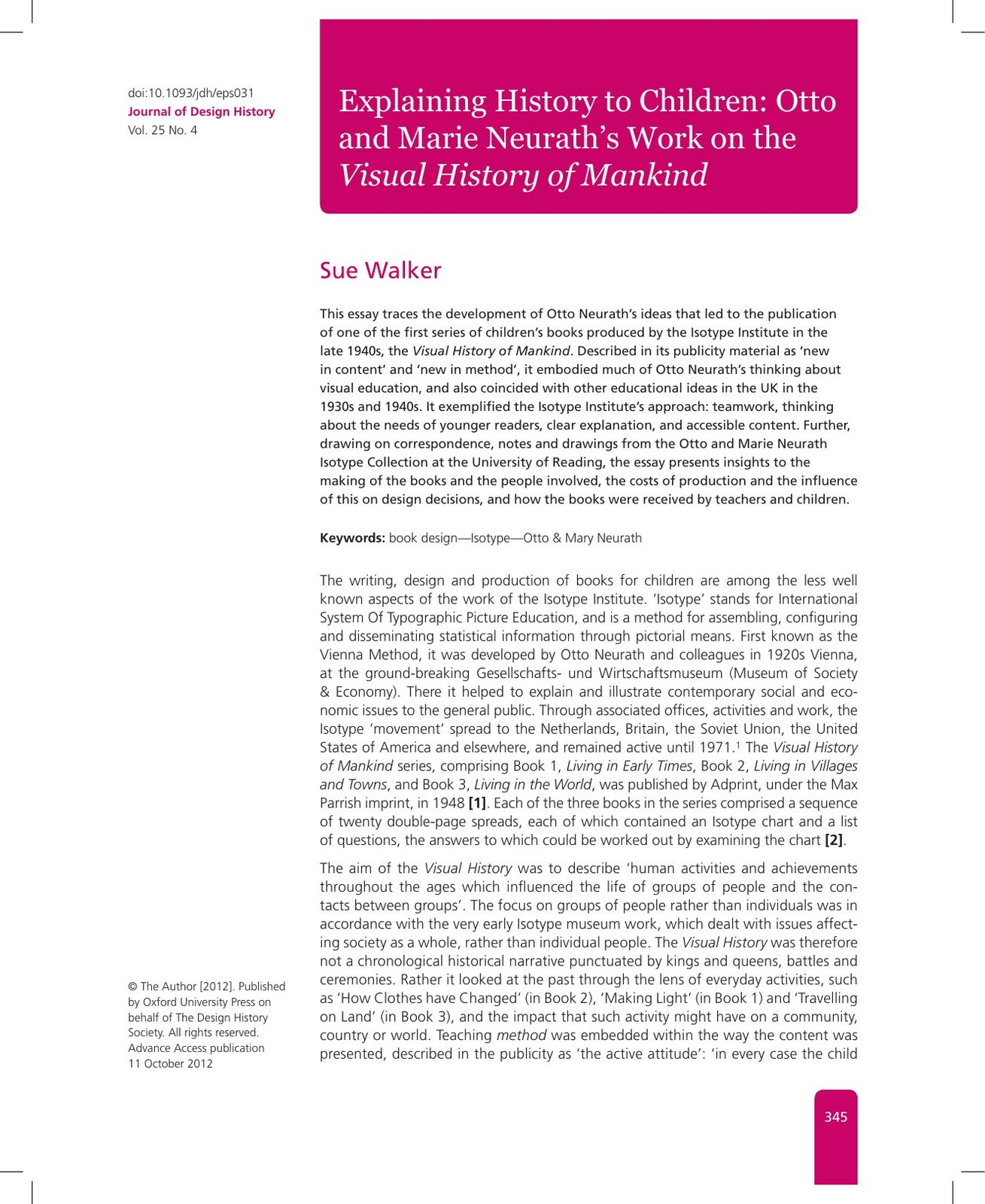
Journal of Design History Explaining History to Children: Otto
Vol. 25 No. 4
 and Marie Neurath’s Work on the
 Visual History of Mankind

 Sue Walker
 This essay traces the development of Otto Neurath’s ideas that led to the publication
 of one of the first series of children’s books produced by the Isotype Institute in the
 late 1940s, the Visual History of Mankind. Described in its publicity material as ‘new
 in content’ and ‘new in method’, it embodied much of Otto Neurath’s thinking about
 visual education, and also coincided with other educational ideas in the UK in the
 1930s and 1940s. It exemplified the Isotype Institute’s approach: teamwork, thinking
 about the needs of younger readers, clear explanation, and accessible content. Further,
 drawing on correspondence, notes and drawings from the Otto and Marie Neurath
 Isotype Collection at the University of Reading, the essay presents insights to the
 making of the books and the people involved, the costs of production and the influence
 of
Archive ID re-article-pdf-walker-s-2012-explaining-history-to-children-otto-and-marie-neuraths-work-o · Deep zoom and record · Request removal