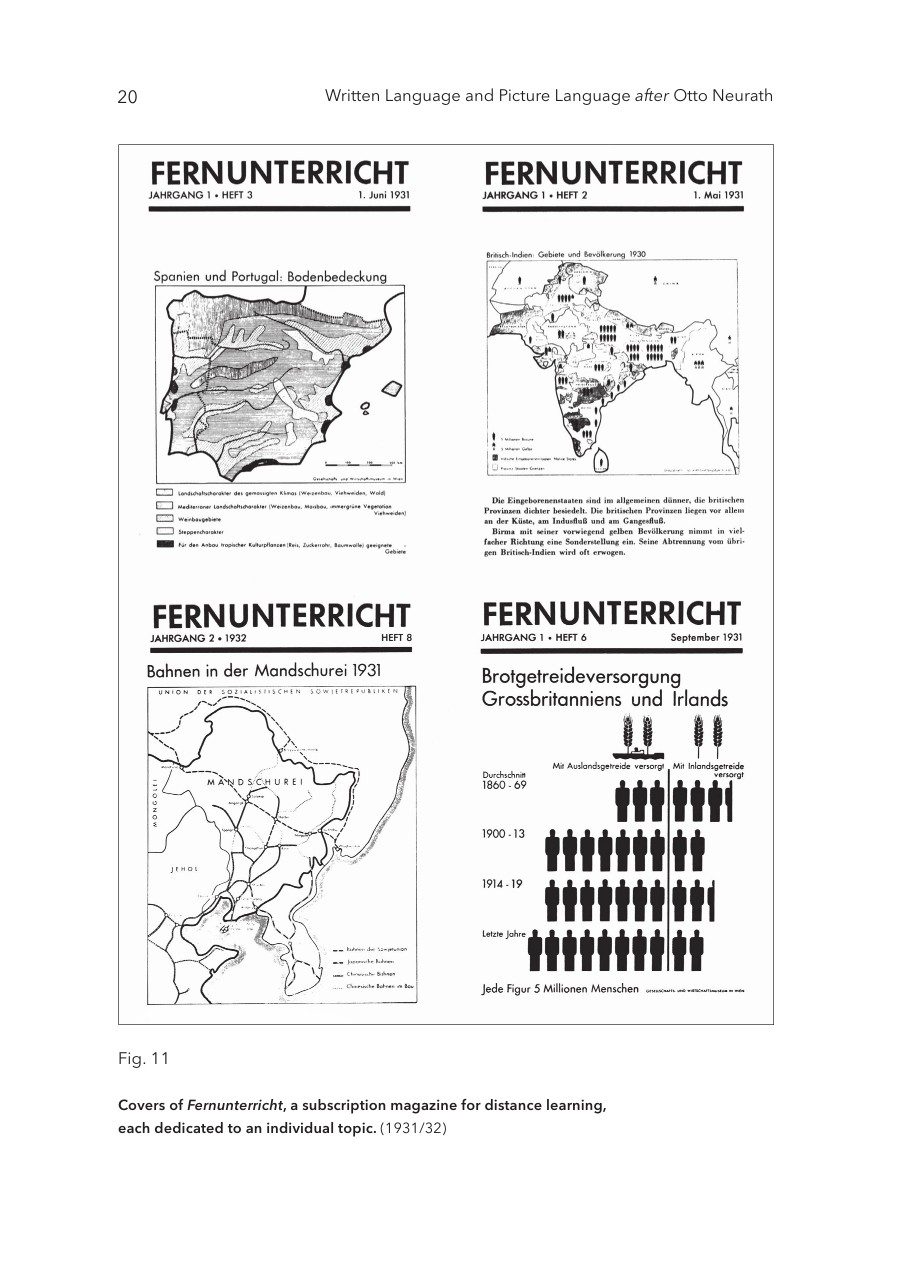
Research · Otto Biography Opening chapter of Image and Imaging in Philosophy, Science and the Arts, vol. 2 (ed. Heinrich, Nemeth, Pichler, Wagner) on the Vienna method and Isotype as an Enlightenment project of communicating knowledge, centred on Neurath's unfinished treatise 'Visual education: humanisation versus popularisation' (1945).
- Author
- Stadler, Friedrich
- Publisher
- ontos Verlag, Frankfurt
- Year
- 2011
- Language
- English
- Text
- From the PDF, searchable
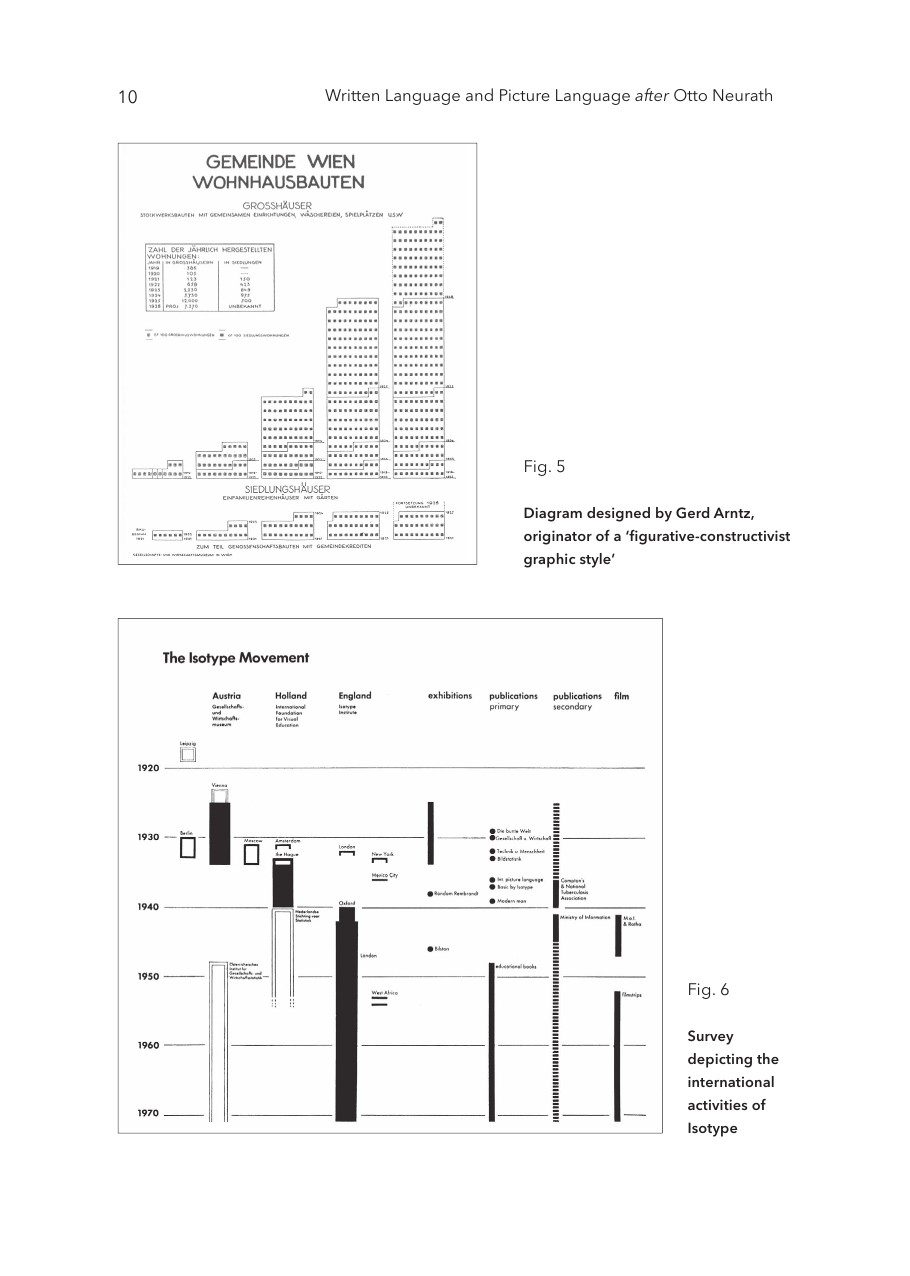
Text on page 1
Written Language and Picture Language
 after Otto Neurath—Popularising or
 Humanising Knowledge?

 Friedrich Stadler, Vienna

The ‘Vienna method of pictorial statistics’, created by Otto Neurath (1882–
1945) and his team in the Social and Economic Museum in Vienna (1925–1934)
and developed, after his forced emigration, into the ‘Isotype’ (International
System Of TYpographic Picture Education), constitutes to this day a relevant
contribution to educational work and the communication of knowledge and
science. The reconstruction and renewing of this Enlightenment concept
through both pictures and writing, within the context of a ‘scientific world
conception’ and the International Encyclopedia of Unified Science, offers a fruit-
ful perspective on the current possibilities and limits of visual communication
between ‘science and the public’.
 The integration, as pushed for by Neurath, of this picture language of
‘figurative constructivism’ (Gerd Arntz) into a comprehensive critical concept
in the tradition of Comenius, Leibniz and the French encyclopédistes, run-
ning all the way to the Vienna Circle, leads to a remarkable, but unfortunately
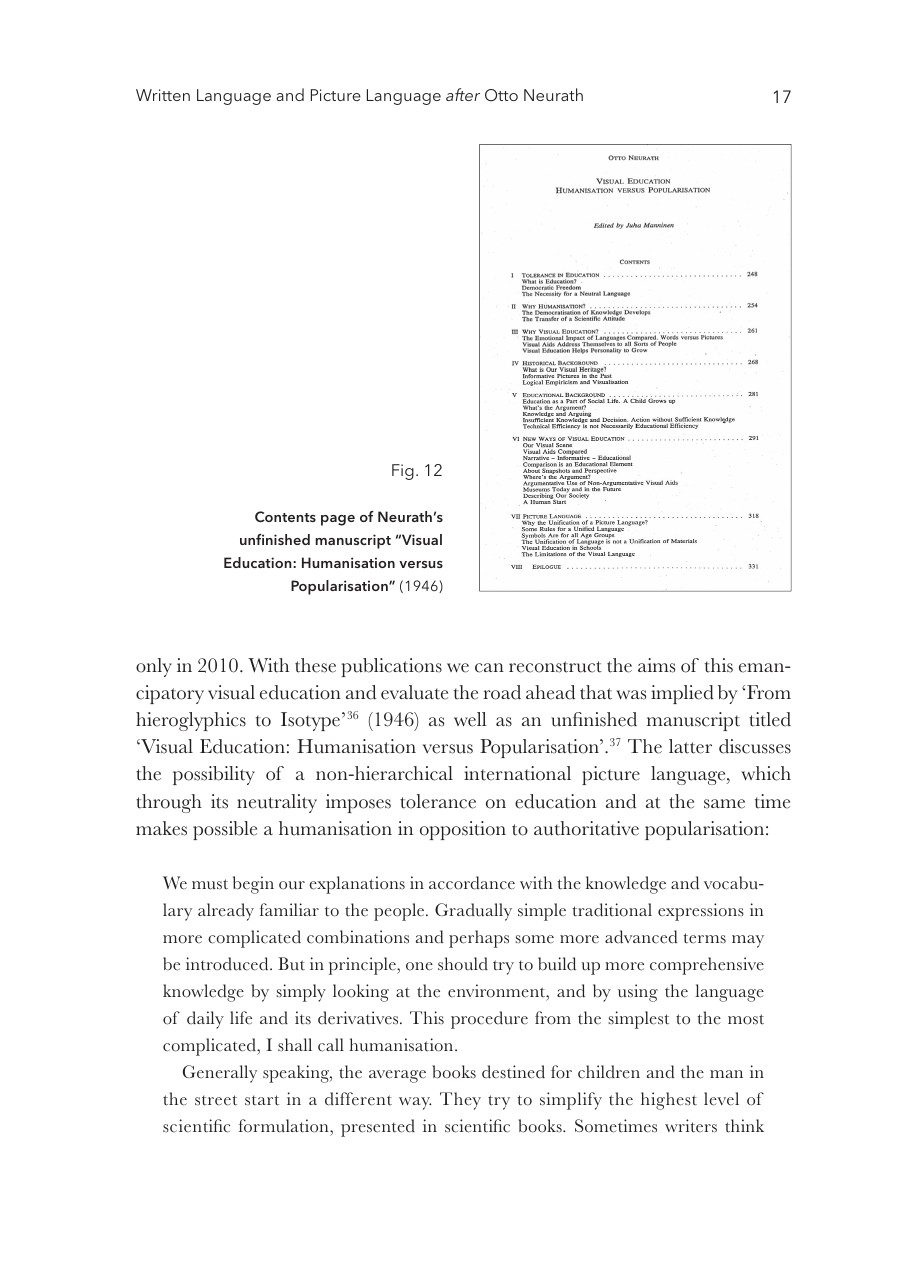
incomplete treatise on ‘Visual education: humanisation versus popularisation’
(Neurath 1945) as a model for a modern museology. Neurath’s posthumous
publication, a comprehensive sketch of a cultural history of Visual Education
(excerpts of which were printed
Archive ID re-article-pdf-written-language-and-picture-language-af · Deep zoom and record · Request removal